



Search titles
Displaying results 31 to 40 of 226.

The Viṣṇu Purāṇa »
Ancient Annals of the God with Lotus Eyes
Authored by: McComas Taylor
Publication date: June 2021
This translation of The Viṣṇu Purāṇa is also available as a free audiobook (see the 'Additional Resources' tab).
Viṣṇu is a central deity in the Hindu pantheon, especially in his manifestation as the seductive cattle-herding youth, Kṛṣṇa. The purāṇas are sacred texts, which, as the Sanskrit name implies, are collections of narratives from ‘long ago’. The Viṣṇu Purāṇa is thus an ancient account of the universe and guide to life, which places Viṣṇu-Kṛṣṇa at the centre of creation, theology and reality itself.
This text, composed about 1,500 years ago, provides a comprehensive and accessible introduction to the most important themes and narratives that constitute the Hindu imagination: the creation and destruction of the universe, the origin of gods and mortals, the peopling of the world, and the structure and conduct of ideal brahminical society.
The Viṣṇu Purāṇa describes the trials of exemplary devotees, the existential struggles between gods and demons, and the exploits of legendary cultural heroes. It also contains many ecstatic songs of praise for the deity. The ever-popular accounts of Kṛṣṇa’s love games with the cattle-herding girls of Vṛṇdāvana, which have proliferated in literature, dance, song and visual arts over the millennia, are found here in authoritative form.
This faithful yet fluent blank-verse rendering of this great Hindu classic is the first new English translation in nearly 200 years. It will be welcomed by the scholarly community, while remaining readily accessible to a general readership.

Austronesian Paths and Journeys »
Edited by: James J. Fox
Publication date: May 2021
This is the eighth volume in the Comparative Austronesian series. The papers in this volume examine metaphors of path and journey among specific Austronesian societies located on islands from Taiwan to Timor and from Madagascar to Micronesia. These diverse local expressions define common cultural conceptions found throughout the Austronesian-speaking world.
Crisis »
Edited by: Jane Golley, Linda Jaivin, Sharon Strange
Publication date: April 2021
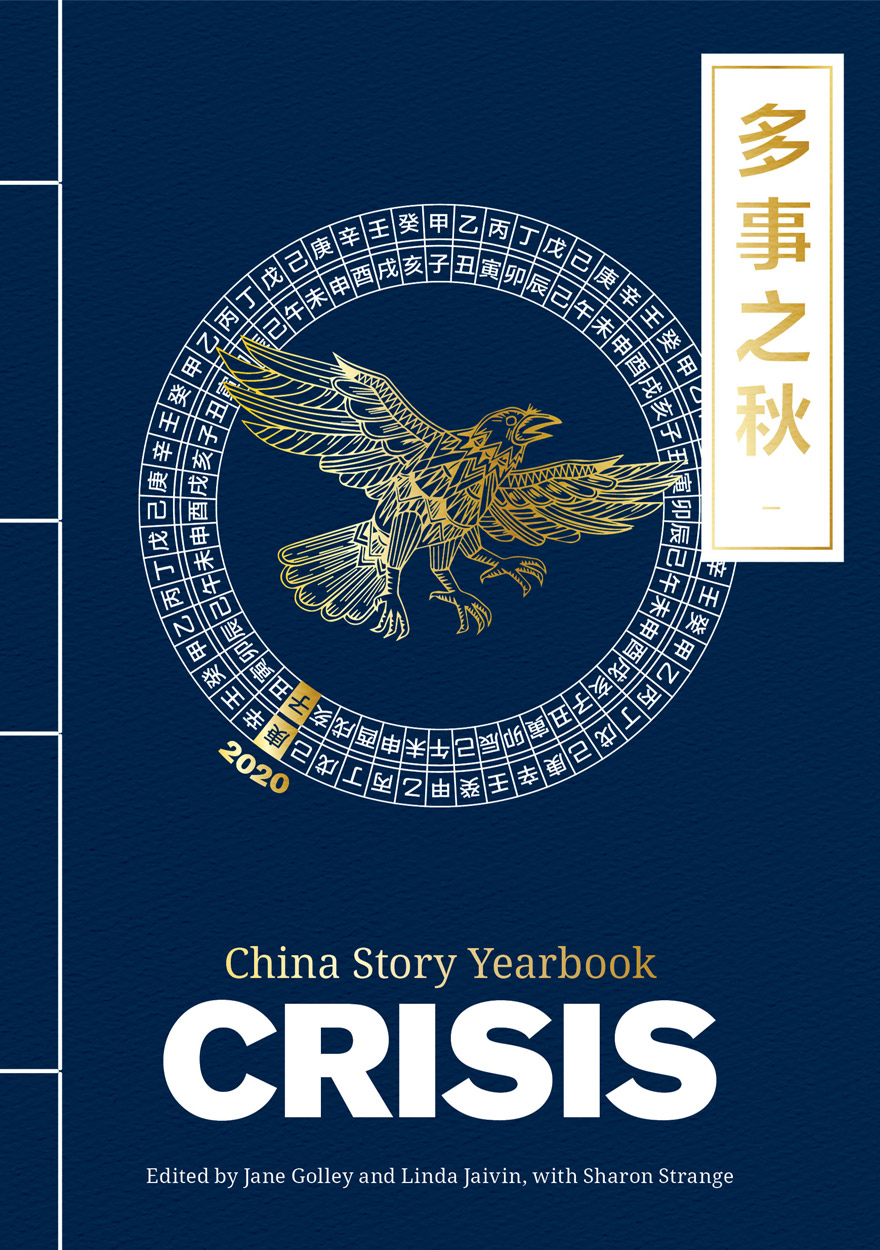
The year 2020 was marked by a series of rolling crises. The Australian wildfires at the start of the year were a catastrophic sign of the global climate crisis. Xi Jinping’s announcement in September that the People’s Republic of China would become carbon neutral by 2060 could help alleviate the crisis, but China has to fix its coal problem first. The big story was, of course, the global COVID-19 pandemic. Appearing to originate in a Wuhan wet market, by year’s end the pandemic had claimed nearly 2 million lives worldwide, put whole countries into lockdown, and sent economies around the world tumbling into recession. China itself successfully suppressed the disease at home and recorded positive economic growth for the year — proving, at least according to the Chinese Communist Party, the ‘superiority of the socialist system’. Not everyone was convinced, with persistent questions about the CCP’s initial cover up of the outbreak, and how the lack of transparency helped it become a pandemic in the first place.
The China Story Yearbook 2020: Crisis surveys the multiple crises of the year of the Metal Rat, including the catastrophic mid-year floods that sparked fears about the stability of the Three Gorges Dam. It looks at how Chinese women fared through the pandemic, from the rise in domestic violence to portraits of female sacrifice on the medical front line to the trolling of a famous dancer for being childless. It also examines the downward-spiralling Sino-Australian relationship, the difficult ‘co-morbidities’ of China’s relations with the US, the end of ‘One Country, Two Systems’ in Hong Kong, the simmering border conflict with India, and the rise of pandemic-related anti-Chinese racism. The Yearbook also explores the responses to crisis of, among others, Daoists, Buddhists, and humourists — because when all else fails, there’s always philosophy, prayer, and laughter.

Australian Travellers in the South Seas »
Authored by: Nicholas Halter
Publication date: February 2021
This book offers a wide-ranging survey of Australian engagement with the Pacific Islands in the late 19th and early 20th centuries. Through over 100 hitherto largely unexplored accounts of travel, the author explores how representations of the Pacific Islands in letters, diaries, reminiscences, books, newspapers and magazines contributed to popular ideas of the Pacific Islands in Australia. It offers a range of valuable insights into continuities and changes in Australian regional perspectives, showing that ordinary Australians were more closely connected to the Pacific Islands than has previously been acknowledged. Addressing the theme of travel as a historical, literary and imaginative process, this cultural history probes issues of nation and empire, race and science, commerce and tourism by focusing on significant episodes and encounters in history. This is a foundational text for future studies of Australia’s relations with the Pacific, and histories of travel generally.

How Local Art Made Australia’s National Capital »
Authored by: Anni Doyle Wawrzyńczak
Publication date: August 2020
Canberra’s dual status as national capital and local city dramatically affected the rise of a unique contemporary arts scene. This complex story, informed by rich archival material and interviews, details the triumph of local arts practice and community over the insistent cultural nation-building of Australia’s capital. It exposes local arts as a vital force in Canberra’s development and uncovers the influence of women in the growth of its visual arts culture. A broad illumination of the city-wide development of arts and culture from the 1920s to 2001 is combined with the story of Bitumen River Gallery and its successor Canberra Contemporary Art Space from 1978 to 2001. This history traces the growth of the arts from a community-led endeavour, through a period of responses to social and cultural needs, and ultimately to a humanising local practice that transcended national and international boundaries.

Bridging Australia and Japan: Volume 2 »
The writings of David Sissons, historian and political scientist
Edited by: Keiko Tamura, Arthur Stockwin
Publication date: August 2020
This book is volume two of the writings of David Sissons, who first established his academic career as a political scientist specialising in Japanese politics, and later shifted his focus to the history of Australia–Japan relations. In this volume, we reproduce his writings on Japanese politics, the Pacific War and Australian war crimes trials after the war. He was a pioneer in these fields, carrying out research across cultural and language borders, and influenced numerous researchers who followed in his footsteps. Much of what he wrote, however, remained unpublished at the time of his death in 2006, and so the editors have included a selection of his hitherto unpublished work along with some of his published writings.
Breaking Japanese Diplomatic Codes, edited by Desmond Ball and Keiko Tamura, was published in 2013, and the first volume of Bridging Australia and Japan was published in 2016. This book completes this series, which reproduces many of David Sissons’ writings. The current volume covers a wide range of topics, from Japanese wartime intentions towards Australia, the Cowra Breakout, and Sissons’ early writings on Japanese politics. Republished in this volume is his comprehensive essay on the Australian war crimes trials, which influenced the field of military justice research. Georgina Fitzpatrick and Keiko Tamura have also contributed essays reflecting on his research.
Sissons was an extraordinarily meticulous researcher, leaving no stone unturned in his search for accuracy and completeness of understanding, and should be considered one of Australia’s major historians. His writings deal not only with diplomatic negotiations and decision-making, but also the lives of ordinary and often nameless people and their engagements with their host society. His warm humanity in recording ordinary people’s lives as well as his balanced examination of historical incidents and issues from both Australian and Japanese perspectives are hallmarks of his scholarship.
On the Frontiers of History »
Rethinking East Asian Borders
Authored by: Tessa Morris-Suzuki
Publication date: August 2020
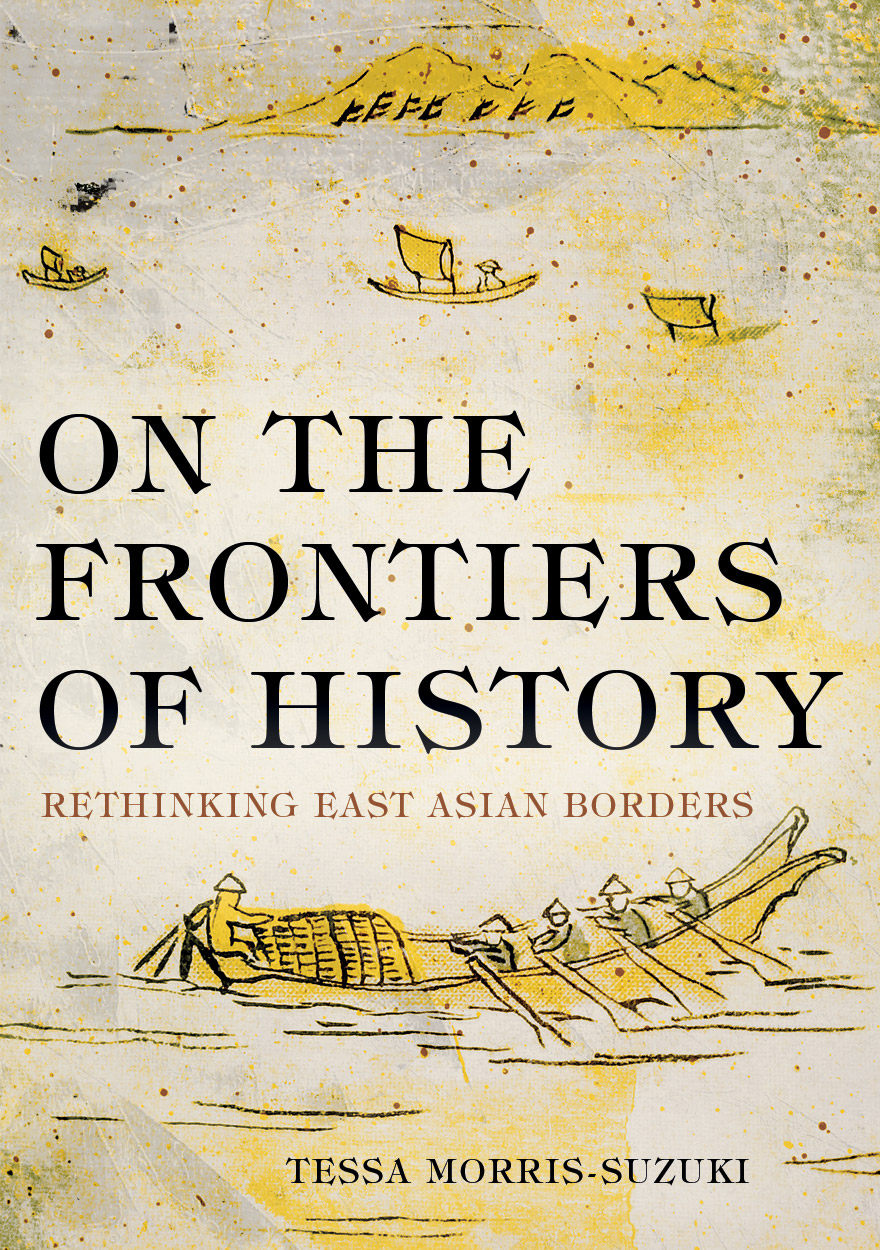
Why is it that we so readily accept the boundary lines drawn around nations or around regions like ‘Asia’ as though they were natural and self-evident, when in fact they are so mutable and often so very arbitrary? What happens to people not only when the borders they seek to cross become heavily guarded, but also when new borders are drawn straight through the middle of their lives? The essays in this book address these questions by starting from small places on the borderlands of East Asia and looking outwards from the small towards the large, asking what these ‘minor pasts’ tell us about the grand narratives of history. In the process, it takes the reader on a journey from Renaissance European visions of ‘Tartary’, through nineteenth-century racial theorising, imperial cartography and indigenous experiences of modernity, to contemporary debates about Big History in an age of environmental crisis.
Fluid Matter(s) »
Flow and Transformation in the History of the Body
Edited by: Natalie Köhle, Shigehisa Kuriyama
Publication date: August 2020
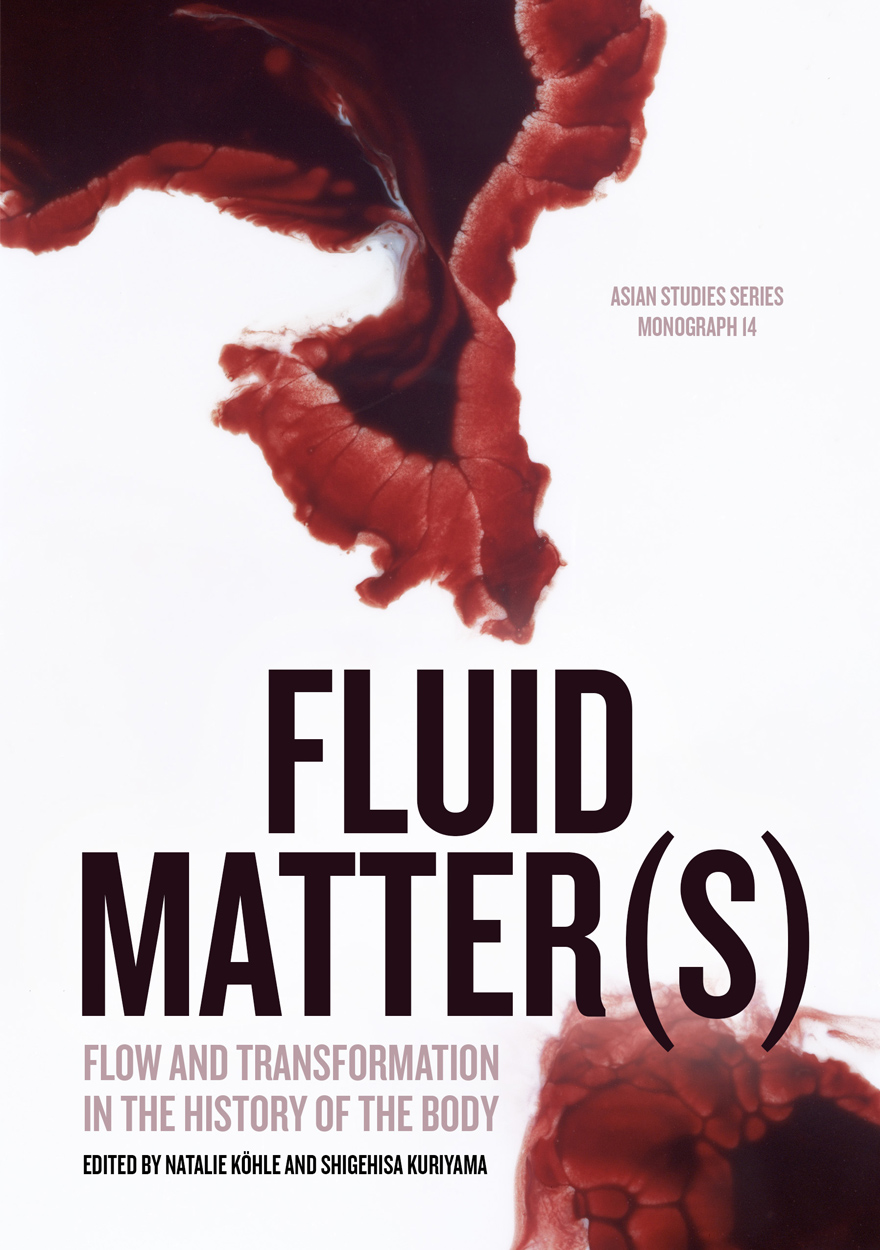
Once upon a time, doctors across Eurasia imagined human beings in ways that strike us today as profoundly strange and alien. For over 2,000 years, they worried anxiously about fluids to which our modern doctors spare hardly a thought (such as sweat, phlegm and qi) and they obsessed over details (such as whether a person’s pores were open or closed) whose meaning and vital importance have now largely faded from memory. Through a series of case studies from Europe, India, China, Mongolia and Japan, Fluid Matter(s) suggests ways to make sense of this strange and dimly remembered past, and urges us to reflect anew on the significance of fluids and flows in the history of medicine.
The book also urges us, more generally, to reimagine the way in which we narrate history. The articles here are essays, in the original French sense. They are exploratory trials, experiments to illustrate some of the ways in which digital texts can go beyond the affordances of print. They test visual effects that are inconceivable on a paper page, but that are easily conjured on an electronic screen. Fluid Matter(s) is the first work of its kind: a study that narrates the body’s past in a form that embodies new futures for narrative.
Not available for purchase

What’s France got to do with it? »
Contemporary memoirs of Australians in France
Authored by: Juliana de Nooy
Publication date: July 2020
While only one book-length memoir recounting the sojourn of an Australian in France was published in the 1990s, well over 40 have been published since 2000, overwhelmingly written by women. Although we might expect a focus on travel, intercultural adjustment and communication in these texts, this is the case only in a minority of accounts. More frequently, France serves as a backdrop to a project of self-renovation in which transplantation to another country is incidental, hence the question ‘What’s France got to do with it?’
The book delves into what France represents in the various narratives, its role in the self-transformation, and the reasons for the seemingly insatiable demand among readers and publishers for these stories. It asks why these memoirs have gained such traction among Australian women at the dawn of the twenty-first century and what is at stake in the fascination with France.

China Dreams »
Publication date: April 2020
The year 2019 marked a number of significant anniversaries for the People’s Republic of China (PRC), each representing different ‘Chinese dreams’. There was the centennial of the May Fourth Movement — a dream of patriotism and cultural renewal. The PRC celebrated its seventieth anniversary — a dream of revolution and national strength. It was also thirty years since the student-led Protest Movement of 1989 — dreams of democracy and free expression crushed by government dreams of unity and stability. Many of these ‘dreams’ recurred in new guises in 2019. President Xi Jinping tightened his grip on power at home while calling for all citizens to ‘defend China’s honour abroad’. Escalating violence in Hong Kong, the ongoing suppression of Uyghurs in Xinjiang, and deteriorating Sino-US relations dominated the headlines. Alongside stories about China’s advances in artificial intelligence and geneticially modified babies and its ambitions in the Antarctic and outer space, these issues fuelled discussion about what Xi’s own ‘China Dream’ of national rejuvenation means for Chinese citizens and the rest of the world.
The China Story Yearbook: China Dreams reflects on these issues and more. It surveys the dreams, illusions, aspirations, and nightmares that coexisted (and clashed) in 2019 in China and beyond. As ever, we take a cross-disciplinary perspective that recognises the inextricable links between economy, politics, culture, history, language, and society. The Yearbook, with its accessible analysis of the main events and trends of the year, is an essential tool for understanding China’s growing power and influence around the world.