



Search titles
Displaying results 431 to 440 of 572.
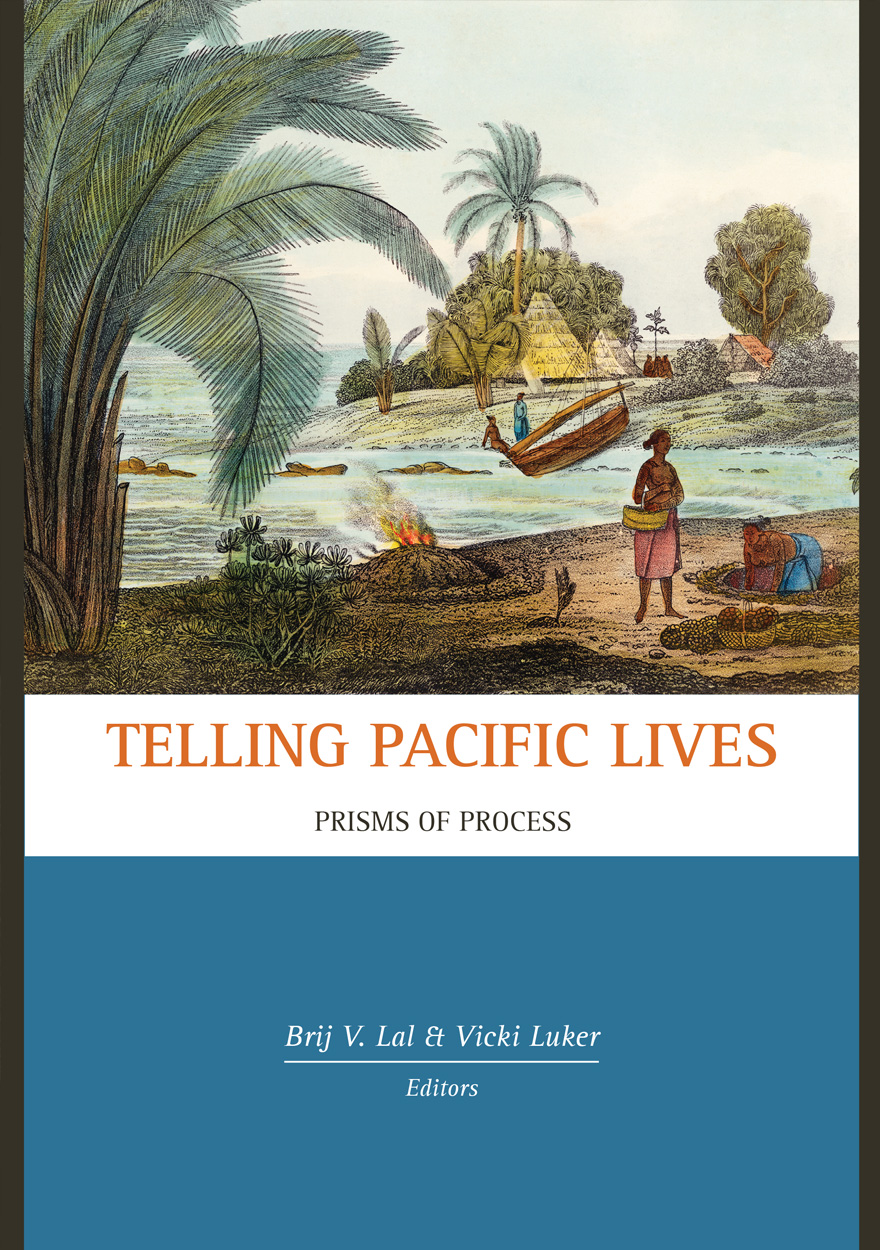
Telling Pacific Lives »
Prisms of Process
Edited by: Brij V. Lal, Vicki Luker
Publication date: June 2008
How are Pacific lives imagined, written and read? How are they refracted through prisms of process? From legends about culture heroes to biographies of national leaders, from tales of ancestors to stories of contemporary men and women, from lives told of both the famous and the nameless, this collection of essays — by historians and anthropologists, Islanders and Island scholars — probes questions of personhood, identity, memory, and time across the sweep of the Pacific, as well as practical issues of research and writing.

Troubled Waters »
Confronting the Water Crisis in Australia’s Cities
Edited by: Patrick Troy
Publication date: June 2008
Australian cities have traditionally relied for their water on a ‘predict-and-provide’ philosophy that gives primacy to big engineering solutions. In more recent years privatised water authorities, seeking to maximise consumption and profits, have reinforced the emphasis on increasing supply. Now the cities must cope with the stresses these policies have imposed on the eco-systems from which they harvest water, into which they discharge wastes, and on which they are located. Residents are having to pay more for their water, while the cities themselves are becoming less sustainable.
Must we build more dams and desalination plants, or should we be managing the demand for urban water more prudently? This book explores the demand for urban water and how it has changed in response to shifting social mores over the past century. It explains how demand for centralised provision of water might be reshaped to enable the cities to better cope with expected changes in supply as our climate changes. And it discusses the implications of property rights in water for proposals to privatise water services.

Agenda - A Journal of Policy Analysis and Reform: Volume 15, Number 2, 2008 »
Authored by: William Coleman, Alex Robson
Publication date: June 2008
Agenda is a refereed, ECONLIT-indexed and RePEc-listed journal of the College of Business and Economics, The Australian National University. Launched in 1994, Agenda provides a forum for debate on public policy, mainly (but not exclusively) in Australia and New Zealand. It deals largely with economic issues but gives space to social and legal policy and also to the moral and philosophical foundations and implications of policy.
Subscribe to the Agenda Alerting service if you wish to be advised on forthcoming or new issues.
Download for free
Not available for purchase
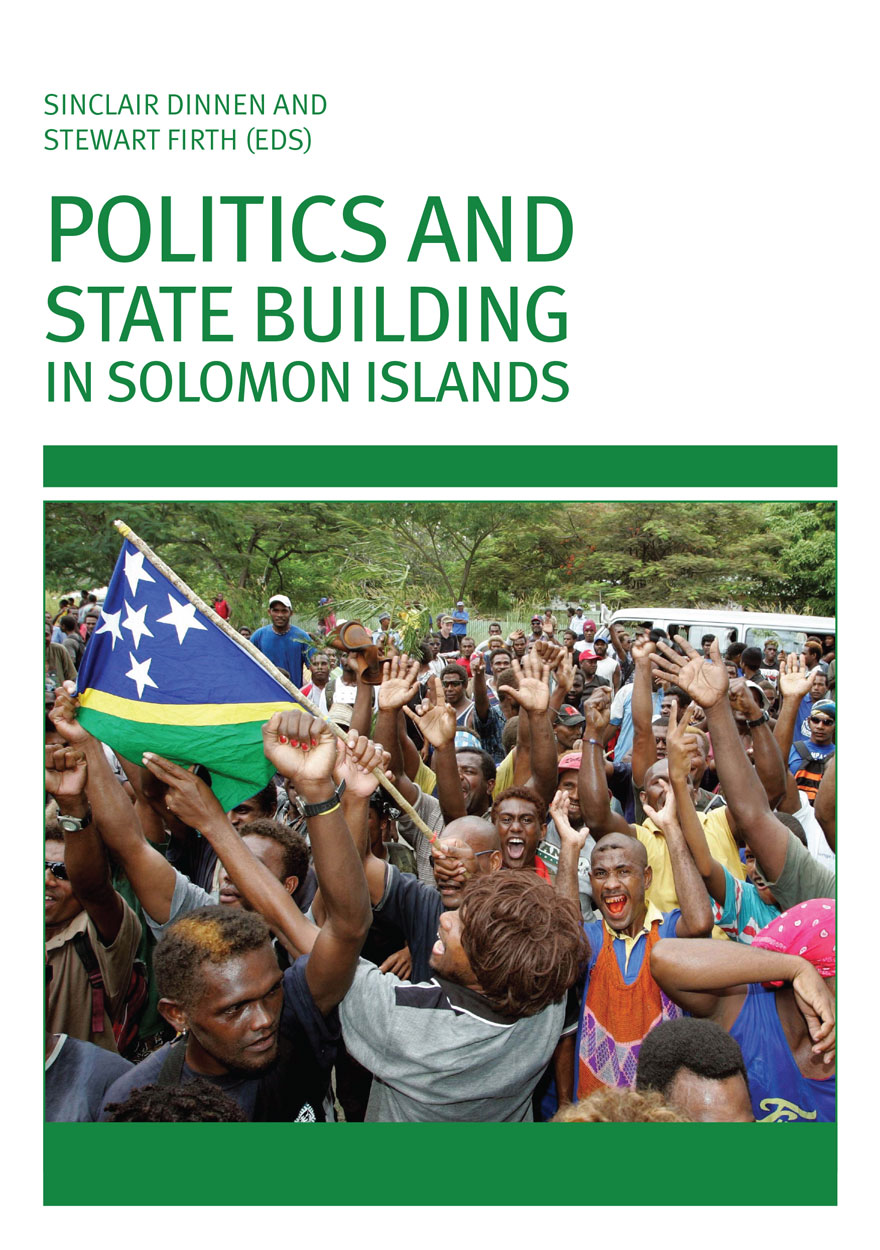
Politics and State Building in Solomon Islands »
Edited by: Sinclair Dinnen, Stewart Firth
Publication date: May 2008
Politics and State Building in Solomon Islands examines a crisis moment in recent Solomon Islands history. Contributors examine what happened when unrest engulfed the capital of the small Melanesian country in the aftermath of the 2006 national elections, and consider what these events show about the Solomon Islands political system, the influence of Asian interests in business and politics, and why the crisis is best understood in the context of the country’s volatile blend of traditional and modern politics.
Until the disturbances of April 2006 and subsequent deterioration in bilateral relations between Australia and Solomon Islands under the Sogavare government, experts had hailed the Regional Assistance Mission to Solomon Islands (RAMSI) as an unqualified success. Some saw it as a model for ‘cooperative intervention’ in ‘failing states’ worldwide. Following these developments success seems less certain and aspects of the RAMSI model appear flawed.
Using the case of Solomon Islands, this book raises fundamental questions about the nature of ‘cooperative intervention’ as a vehicle for state building, asking whether it should be construed as a mainly technical endeavour or whether it is unavoidably a political undertaking with political consequences. Providing a critical but balanced analysis, Politics and State Building in Solomon Islands has important implications for the wider debate about international state-building interventions in ‘failed’ and ‘failing’ states.
Australia Under Construction »
Nation-building past, present and future
Edited by: John Butcher
Publication date: April 2008
The Australian nation is a work in progress. So conclude the authors whose views are represented in this most recent offering in the ANZSOG monograph series, Australia Under Construction: Nation-building past, present and future. From its beginnings as a settler society through to present day concerns about ‘broadbanding the nation’, the nation-building narrative has resonated with Australians. The very idea of nation-building has both excited the popular imagination about what we might achieve as a society and a nation, and has occasioned despair about missed opportunities. The eleven authors contributing to this monograph reflect on these, and other themes from a variety of perspectives. They challenge our understanding of the term ‘nation-building’, reflect on its contemporary relevance as a framework for public policy and even re-appraise the contribution of past ‘iconic’ nation-building endeavours. To this subject the authors bring intelligence, wit and a healthy disdain for sacred cows. A stimulating read for anyone interested in the history, challenges and prospects of nation-building in Australia.
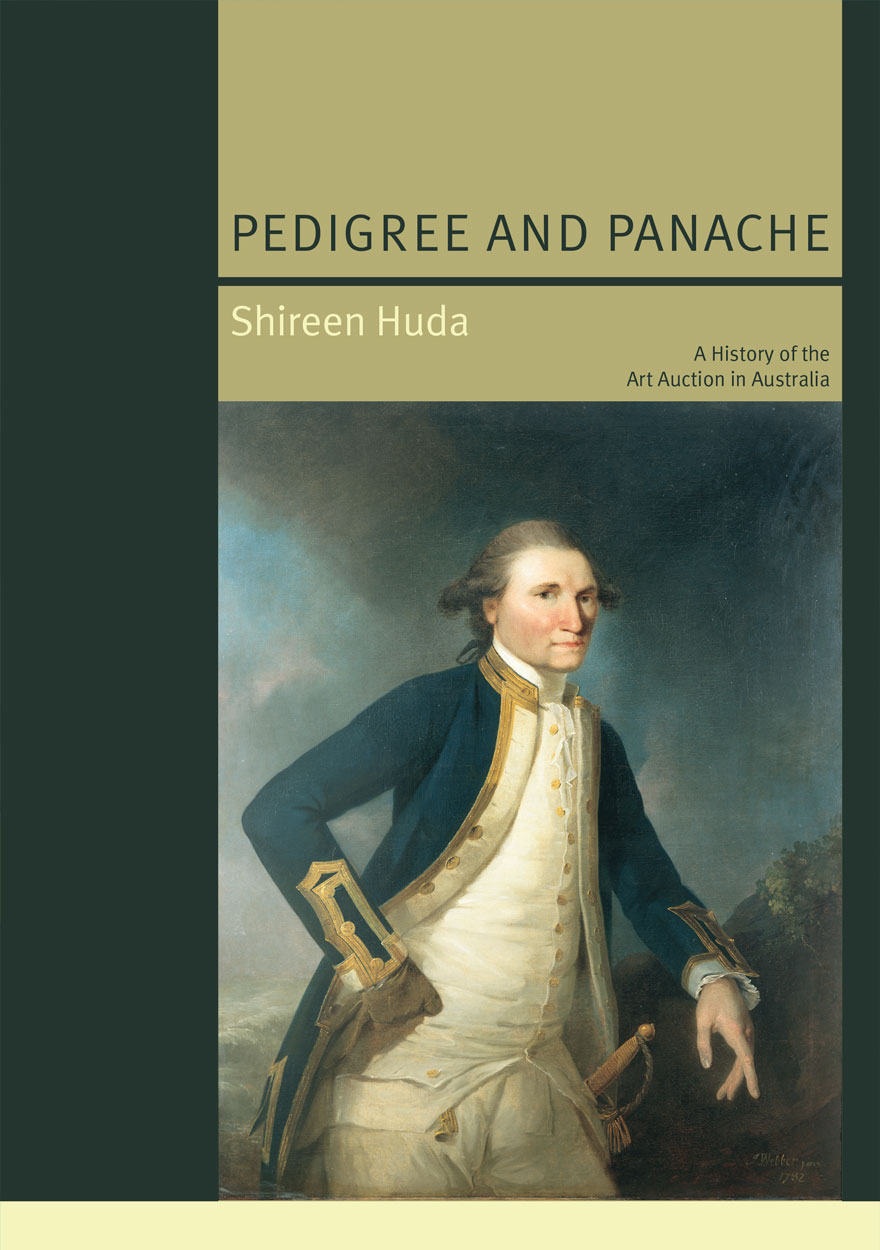
Pedigree and Panache »
A History of the Art Auction in Australia
Authored by: Shireen Huda
Publication date: April 2008
Art auctions have long captured the public imagination. They regularly make news headlines and have become synonymous with glamour, money and social distinction. The marketing of auction houses and the works they sell has resulted in firms attaining authoritative positions and the ability both to influence and reflect collecting tastes. Pedigree and Panache is the first comprehensive history of the art auction in Australia. In this fascinating work, Shireen Huda investigates the construction of the glamorous reputation of art auctions and art auction houses. Featuring absorbing case studies of key art auctions and major art auction houses in Australia (including Christie’s, Sotheby’s and Deutscher-Menzies) the work provides an overview of the origin and international development of art auctions. The development of the Australian marketplace is then explored, detailing colonial inception and continuing until Christie’s withdrawal of its saleroom presence in 2006.
This book is an engaging read for those involved in the art industry, as well as historians, artists, collectors and anyone interested in the art market, art investment, social history and art history.

Agenda - A Journal of Policy Analysis and Reform: Volume 15, Number 1, 2008 »
Authored by: William Coleman, Alex Robson
Publication date: April 2008
Agenda is a refereed, ECONLIT-indexed and RePEc-listed journal of the College of Business and Economics, The Australian National University. Launched in 1994, Agenda provides a forum for debate on public policy, mainly (but not exclusively) in Australia and New Zealand. It deals largely with economic issues but gives space to social and legal policy and also to the moral and philosophical foundations and implications of policy.
Subscribe to the Agenda Alerting service if you wish to be advised on forthcoming or new issues.
Download for free
Not available for purchase
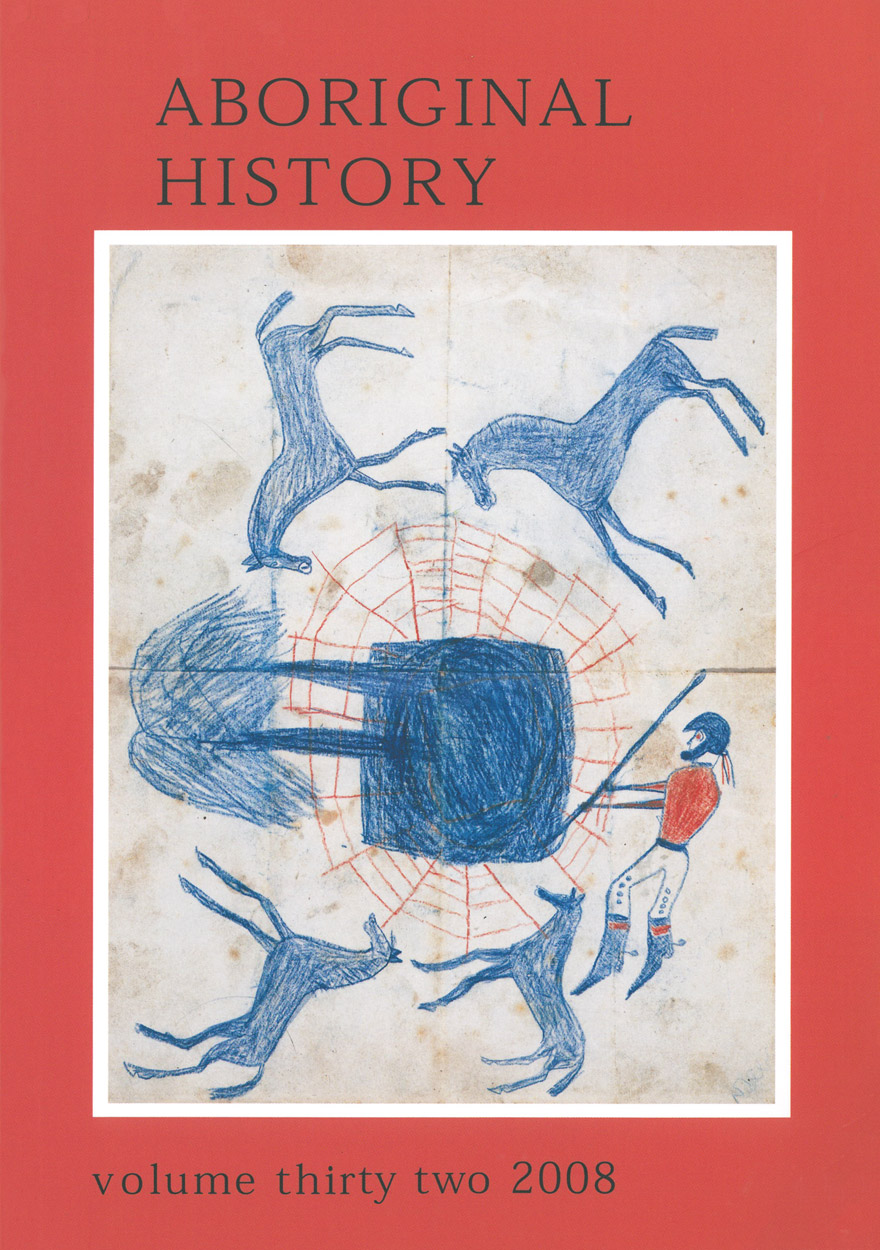
Aboriginal History Journal: Volume 32 »
Publication date: 2008
Since 1977, the journal Aboriginal History has pioneered interdisciplinary historical studies of Australian Aboriginal people’s and Torres Strait Islander’s interactions with non-Indigenous peoples. It has promoted publication of Indigenous oral traditions, biographies, languages, archival and bibliographic guides, previously unpublished manuscript accounts, critiques of current events, and research and reviews in the fields of anthropology, archaeology, sociology, linguistics, demography, law, geography and cultural, political and economic history.
Aboriginal History Inc. is a publishing organisation based in the Australian Centre for Indigenous History, Research School of Social Sciences, The Australian National University, Canberra.
For more information on Aboriginal History Inc. please visit aboriginalhistory.org.au.
Download for free
Not available for purchase
Agency, Contingency and Census Process »
Observations of the 2006 Indigenous Enumeration Strategy in remote Aboriginal Australia
Edited by: Frances Morphy
Publication date: December 2007
The Indigenous Enumeration Strategy (IES) of the Australian National Census of Population and Housing has evolved over the years in response to the perceived ‘difference’ of the Aboriginal and Torres Strait Islander populations. Its defining characteristics are the use of locally recruited, mostly Indigenous collector interviewers, and the administration of a modified collection instrument in discrete Indigenous communities, mostly in remote Australia.
The research reported here is unique. The authors, with the assistance of the Australian Bureau of Statistics, were able to follow the workings of the IES in the 2006 Census from the design of the collection instrument to the training of temporary census field staff at the Northern Territory’s Census Management Unit in Darwin, to the enumeration in four remote locations, through to the processing stage at the Data Processing Centre in Melbourne. This allowed the tracking of data from collection to processing, and an assessment of the effects of information flows on the quality of the data, both as input and output.
This study of the enumeration involved four very different locations: a group of small outstation communities (Arnhem Land), a large Aboriginal township (Wadeye), an ‘open’ town with a majority Aboriginal population (Fitzroy Crossing), and the minority Aboriginal population of a major regional centre (Alice Springs). A comparison between these contexts reveals differences that reflect the diversity of remote Aboriginal Australia, but also commonalities that exert a powerful influence on the effectiveness of the IES, in particular very high levels of short-term mobility. The selection of sites also allowed a comparison between the enumeration process in the Northern Territory, where a time-extended rolling count was explicitly planned for, and Western Australia, where a modified form of the standard count had been envisaged.
The findings suggest that the IES has reached a point in its development where the injection of ever-increasing resources into essentially the same generic set and structure of activities may be producing diminishing returns. There is a need for a new kind of engagement between the Australian Bureau of Statistics and local government and Indigenous community-sector organisations in remote Australia. The agency and local knowledge of Indigenous people could be harnessed more effectively through an ongoing relationship with such organisations, to better address the complex contingencies confronting the census process in remote Indigenous Australia.
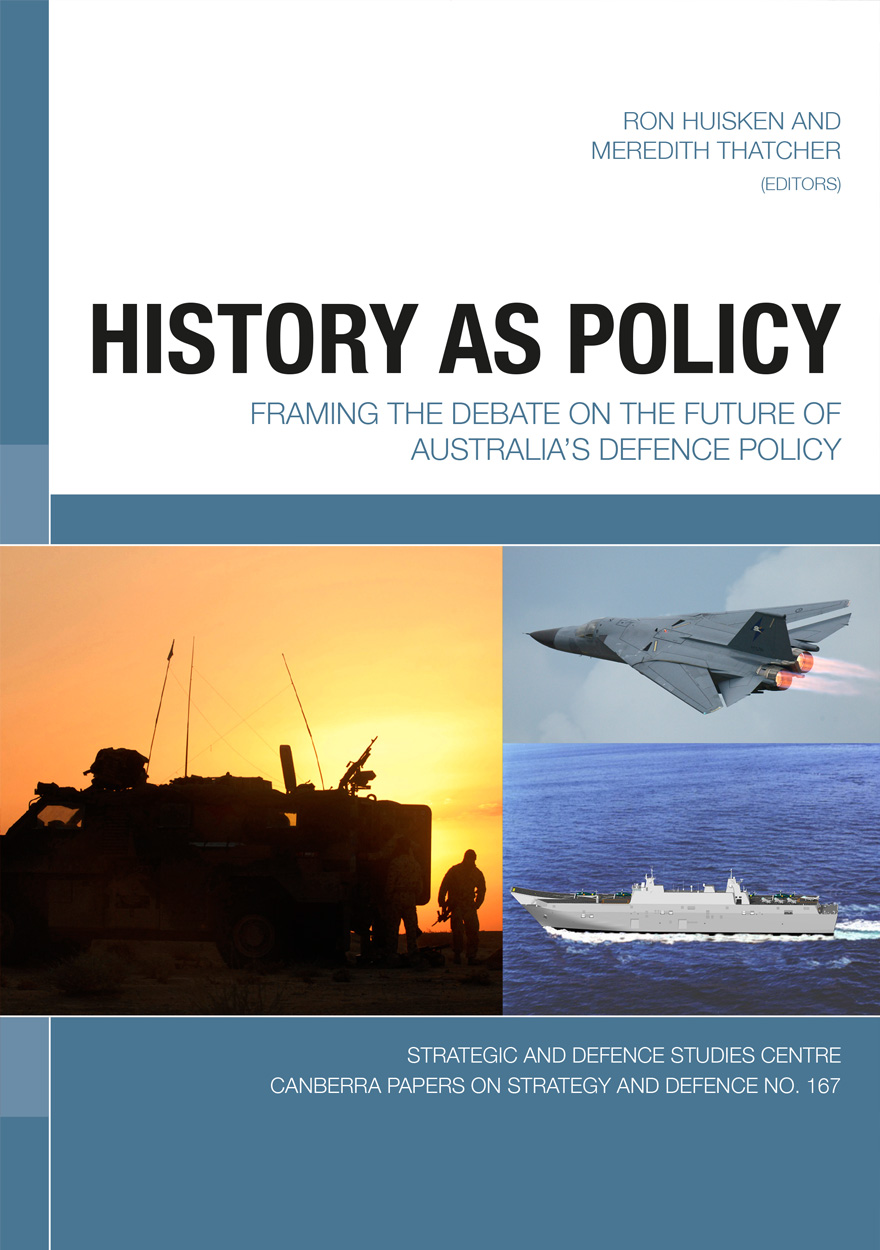
History as Policy »
Framing the debate on the future of Australia’s defence policy
Edited by: Ron Huisken, Meredith Thatcher
Publication date: December 2007
The fortieth anniversary of the Strategic and Defence Studies Centre’s founding provided the opportunity to assemble many of Australia’s leading analysts and commentators to review some of the more significant issues that should define Australian defence policy.
In the first 20 years after its establishment, SDSC scholars played a prominent role in shaping the ideas and aspirations that eventually found official expression in the 1987 Defence of Australia White Paper. This policy sustained a coherent balance between strategy, force structure and budgets for well over a decade. In recent years, however, the cumulative effects of the end of the Cold War and watershed events like the East Timor experience; the attacks on New York and Washington, D.C., in September 2001; the Bali bombings in October 2002; and the invasion of Iraq in March 2003 have fractured the former consensus on defence policy. These developments have eroded acceptance of the core judgements underpinning defence policy. This has led to a more tenuous connection between some recent major equipment acquisitions and declared policy.
The unravelling of the consensus on the ‘defence of Australia’ policy means that we must again undertake a balanced, long-term assessment of the nature of Australia’s strategic interests. Only by doing so can we determine the kinds of armed forces that would contribute most effectively to protecting those interests. The papers collected in this volume are not informed by a common view of where Australia should focus its defence policy, but all address themes that should figure prominently in this difficult but essential task.