



Search titles
Displaying results 21 to 30 of 93.

Exploring the Earth under the Sea »
Australian and New Zealand achievements in the first phase of IODP Scientific Ocean Drilling, 2008–2013
Edited by: Neville Exon
Publication date: October 2017
Exploring the Earth under the Sea brings to life the world’s largest and longest-lived geological research program, which has been drilling over many decades at many locations deep below the ocean floor to recover continuous cores of sediment and rock. Study of these materials has helped us understand how the Earth works now, how it has worked in the past and how it may work in the future. The cores are a wonderful source of information on the dynamic processes that form and reform the Earth, both beneath the ocean and on land. The results have revealed climate and oceanographic change on different time frames, the history of life in the sea and on land including global mass extinctions, the extraordinary story of the great masses of ‘extremophile’ microbes that live beneath the sea bed, the nature of the giant earthquakes and tsunami generated at the trenches where tectonic plates collide, and the nature of submarine volcanoes and metalliferous deposits.
This book outlines the technology and enduring international partnerships that underlie the scientific ocean drilling accomplished by the first phase of IODP, currently involving 23 countries. It highlights the important role of Australian and New Zealand scientists in the program, and the great scientific benefits we have derived from our partnership since joining IODP in 2008. As well as the scientific summaries, there are personal accounts by shipboard scientists of how they found life at sea on two-month expeditions, working 12-hour shifts on a noisy drill ship.

International Review of Environmental History: Volume 3, Issue 2, 2017 »
Edited by: James Beattie
Publication date: October 2017
International Review of Environmental History takes an interdisciplinary and global approach to environmental history. It encourages scholars to think big and to tackle the challenges of writing environmental histories across different methodologies, nations, and time-scales. The journal embraces interdisciplinary, comparative and transnational methods, while still recognising the importance of locality in understanding these global processes.
The journal’s goal is to be read across disciplines, not just within history. It publishes on all thematic and geographic topics of environmental history, but especially encourage articles with perspectives focused on or developed from the southern hemisphere and the ‘global south’.
Download for free
Not available for purchase

Sinuous Objects »
Revaluing Women’s Wealth in the Contemporary Pacific
Edited by: Anna-Karina Hermkens, Katherine Lepani
Publication date: August 2017
Some 40 years ago, Pacific anthropology was dominated by debates about ‘women’s wealth’. These exchanges were generated by Annette Weiner’s (1976) critical reappraisal of Bronisław Malinowski’s classic work on the Trobriand Islands, and her observations that women’s production of ‘wealth’ (banana leaf bundles and skirts) for elaborate transactions in mortuary rituals occupied a central role in Trobriand matrilineal cosmology and social organisation. This volume brings the debates about women’s wealth back to the fore by critically revisiting and engaging with ideas about gender and materiality, value, relationality and the social life and agency of things. The chapters, interspersed by three poems, evoke the sinuous materiality of the different objects made by women across the Pacific, and the intimate relationship between these objects of value and sensuous, gendered bodies.
In the Epilogue, Professor Margaret Jolly observes how the volume also ‘trace[s] a more abstract sinuosity in the movement of these things through time and place, as they coil through different regimes of value … The eight chapters … trace winding paths across the contemporary Pacific, from the Trobriands in Milne Bay, to Maisin, Wanigela and Korafe in Oro Province, Papua New Guinea, through the islands of Tonga to diasporic Tongan and Cook Islander communities in New Zealand’. This comparative perspective elucidates how women’s wealth is defined, valued and contested in current exchanges, bride-price debates, church settings, development projects and the challenges of living in diaspora. Importantly, this reveals how women themselves preserve the different values and meanings in gift-giving and exchanges, despite processes of commodification that have resulted in the decline or replacement of ‘women’s wealth’.

A Bark But No Bite »
Inequality and the 2014 New Zealand General Election
Publication date: August 2017
Based on New Zealand Election Study (NZES) data from a sample of 2,830 eligible voters, A Bark But No Bite explores a puzzle. While there was a lot of talk about inequality before the 2014 general election in New Zealand, and during the campaign, concern about inequality appeared to have no tangible effect on the election outcome. This book shows that, by its attention to the concerns of middle ground voters, the National Government had reduced the potential of policy differences to drive voter choices. Perceptions of competence and effective leadership were National’s strongest suit, crowding out voter concerns over matters of policy. When voters did consider policy, inequality and related concerns were second to the economy. Traditional priorities about health and education, and perceptions of party differences on these matters, had faded into the background.
Meanwhile, voters doubted the opposition Labour Party’s ability to govern effectively in an alternative coalition to that of the National-led government. Labour’s policies were too many. In various ways, they would have chipped away at inequality, but lacked a coherent narrative and presentation. This book confirms that Labour’s proposal to increase the age for receipt of New Zealand superannuation gained Labour no new votes.
Hopes that the ‘missing million’ people who failed to turn out to vote in 2011 would vote in 2014 and give an advantage to the left were unfulfilled. A comprehensive study of the 2014 election, this book provides a detailed account of all these findings, and a host of others.
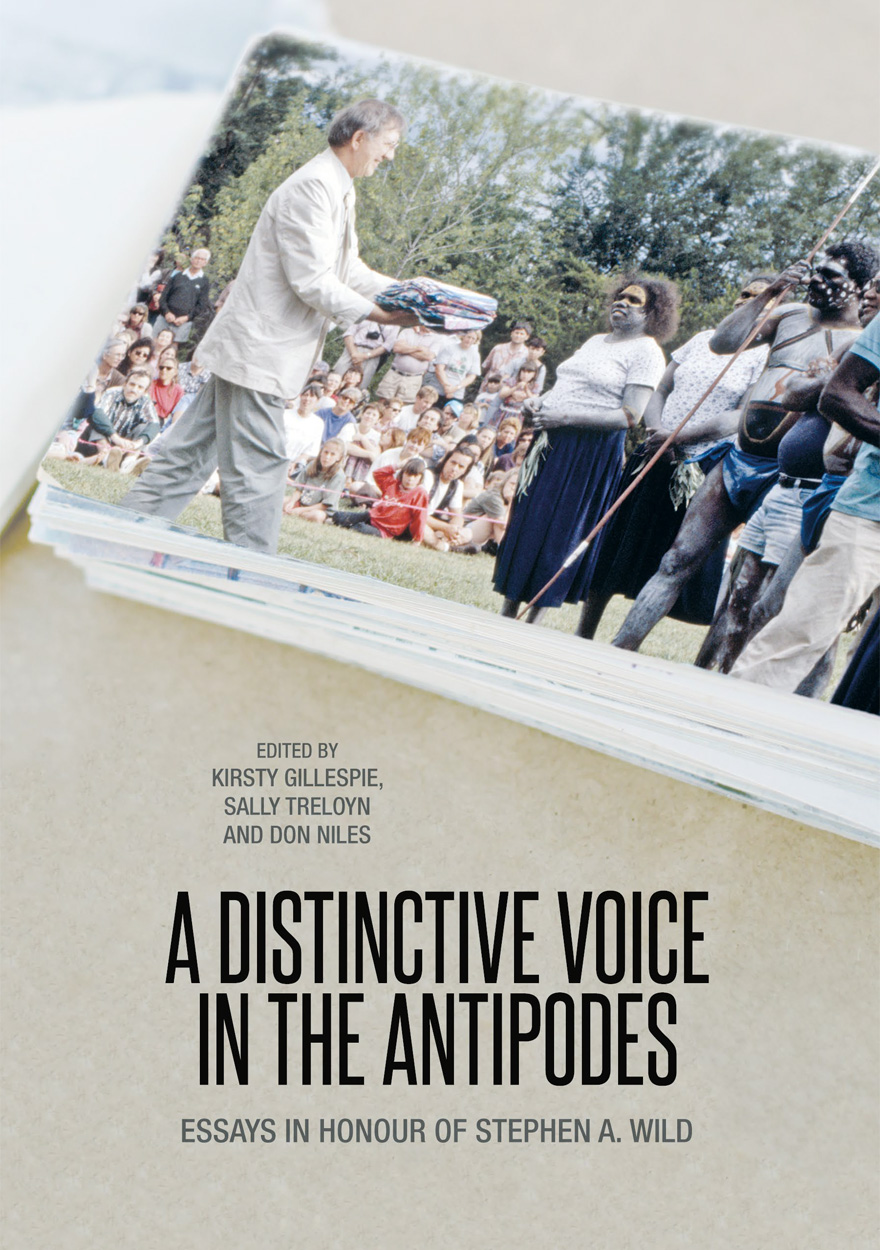
A Distinctive Voice in the Antipodes »
Essays in Honour of Stephen A. Wild
Publication date: July 2017
This volume of essays honours the life and work of Stephen A. Wild, one of Australia’s leading ethnomusicologists. Born in Western Australia, Wild studied at Indiana University in the USA before returning to Australia to pursue a lifelong career with Indigenous Australian music.
As researcher, teacher, and administrator, Wild’s work has impacted generations of scholars around the world, leading him to be described as ‘a great facilitator and a scholar who serves humanity through music’ by Andrée Grau, Professor of the Anthropology of Dance at University of Roehampton, London.
Focusing on the music of Aboriginal Australia and the Pacific Islands, and the concerns of archiving and academia, the essays within are authored by peers, colleagues, and former students of Wild. Most of the authors are members of the Study Group on Music and Dance of Oceania of the International Council for Traditional Music, an organisation that has also played an important role in Wild’s life and development as a scholar of international standing.
Ranging in scope from the musicological to the anthropological—from technical musical analyses to observations of the sociocultural context of music—these essays reflect not only on the varied and cross-disciplinary nature of Wild’s work, but on the many facets of ethnomusicology today.

International Review of Environmental History: Volume 3, Issue 1, 2017 »
Edited by: James Beattie
Publication date: June 2017
International Review of Environmental History takes an interdisciplinary and global approach to environmental history. It encourages scholars to think big and to tackle the challenges of writing environmental histories across different methodologies, nations, and time-scales. The journal embraces interdisciplinary, comparative and transnational methods, while still recognising the importance of locality in understanding these global processes.
The journal’s goal is to be read across disciplines, not just within history. It publishes on all thematic and geographic topics of environmental history, but especially encourage articles with perspectives focused on or developed from the southern hemisphere and the ‘global south’.
Download for free
Not available for purchase

Family Experiments »
Middle-class, professional families in Australia and New Zealand c. 1880–1920
Authored by: Shelley Richardson
Publication date: November 2016
Family Experiments explores the forms and undertakings of ‘family’ that prevailed among British professionals who migrated to Australia and New Zealand in the late nineteenth century. Their attempts to establish and define ‘family’ in Australasian, suburban environments reveal how the Victorian theory of ‘separate spheres’ could take a variety of forms in the new world setting.
The attitudes and assumptions that shaped these family experiments may be placed on a continuum that extends from John Ruskin’s concept of evangelical motherhood to John Stuart Mill’s rational secularism. Central to their thinking was a belief in the power of education to produce civilised and humane individuals who, as useful citizens, would individually and in concert nurture a better society.
Such ideas pushed them to the forefront of colonial liberalism. The pursuit of higher education for their daughters merged with and, in some respects, influenced first-wave colonial feminism. They became the first generation of colonial, middle-class parents to grapple not only with the problem of shaping careers for their sons but also, and more frustratingly, what graduate daughters might do next.

Indigenous Data Sovereignty »
Toward an agenda
Edited by: Tahu Kukutai, John Taylor
Publication date: November 2016
As the global ‘data revolution’ accelerates, how can the data rights and interests of indigenous peoples be secured? Premised on the United Nations Declaration on the Rights of Indigenous Peoples, this book argues that indigenous peoples have inherent and inalienable rights relating to the collection, ownership and application of data about them, and about their lifeways and territories. As the first book to focus on indigenous data sovereignty, it asks: what does data sovereignty mean for indigenous peoples, and how is it being used in their pursuit of self-determination?
The varied group of mostly indigenous contributors theorise and conceptualise this fast-emerging field and present case studies that illustrate the challenges and opportunities involved. These range from indigenous communities grappling with issues of identity, governance and development, to national governments and NGOs seeking to formulate a response to indigenous demands for data ownership. While the book is focused on the CANZUS states of Canada, Australia, Aotearoa/New Zealand and the United States, much of the content and discussion will be of interest and practical value to a broader global audience.
‘A debate-shaping book … it speaks to a fast-emerging field; it has a lot of important things to say; and the timing is right.’
— Stephen Cornell, Professor of Sociology and Faculty Chair of the Native Nations Institute, University of Arizona
‘The effort … in this book to theorise and conceptualise data sovereignty and its links to the realisation of the rights of indigenous peoples is pioneering and laudable.’
— Victoria Tauli-Corpuz, UN Special Rapporteur on the Rights of Indigenous Peoples, Baguio City, Philippines
International Review of Environmental History: Volume 2, 2016 »
Edited by: James Beattie
Publication date: September 2016
International Review of Environmental History takes an interdisciplinary and global approach to environmental history. It encourages scholars to think big and to tackle the challenges of writing environmental histories across different methodologies, nations, and time-scales. The journal embraces interdisciplinary, comparative and transnational methods, while still recognising the importance of locality in understanding these global processes.
The journal’s goal is to be read across disciplines, not just within history. It publishes on all thematic and geographic topics of environmental history, but especially encourage articles with perspectives focused on or developed from the southern hemisphere and the ‘global south’.
Download for free
Not available for purchase

Geography, Power, Strategy and Defence Policy »
Essays in Honour of Paul Dibb
Edited by: Desmond Ball, Sheryn Lee
Publication date: May 2016
Paul Dibb AM has had an extraordinary career. He enjoys an international scholarly reputation of the highest order, while at the same time he has done much distinguished public service. He was a pioneer in moving back and forth between posts in government departments, notably the Department of Defence, and academia. He began as a student of Soviet economic geography, and then spent nearly two decades in Australian Defence intelligence, including service as Head of the National Assessments Staff (NAS) in the Joint Intelligence Organisation (JIO) from 1974 to 1978, Deputy Director of JIO in 1978–80, Director of JIO in 1986–88, and Deputy Secretary of Defence (Strategy and Intelligence) in 1988–91, before becoming a Professor in the Strategic and Defence Studies Centre (SDSC) at The Australian National University (where he is now an Emeritus Professor). He has been quite happy to engage in vigorous public debate about important and controversial strategic and defence issues, giving him a high public profile.
The contributors include two former Chancellors of ANU, one a former Minister of Defence, and the other a former Secretary of the Department of Defence, a former Chief of the Defence Force (CDF), and other former senior officials, as well as academic specialists in geography, international relations, and strategic and defence studies.
‘This would be a high-quality set of essays for any edited volume, but for a festschrift – a genre that sometimes generates uneven collections – this is an exceptional assembly. The individual pieces are very good; together, they have coherence and power.’
– Professor Ian Hall, Professor of International Relations, Griffith University