



Search titles
Displaying results 61 to 70 of 572.

Vietnam Task »
The 5th Battalion, The Royal Australian Regiment, 1966–67
Authored by: Robert O’Neill
Publication date: November 2022
On 24 May 1966, eight hundred men of the 5th Battalion, The Royal Australian Regiment, landed at Nui Dat, in Viet Cong territory. For the next 12 months they were faced with the task of restoring peace, civil law and regular commerce to the Vietnamese of Phuoc Tuy province. This book is a detailed record of those months in the monsoon jungles—of the problems that were faced and the solutions that were found.
Captain O’Neill’s position as battalion intelligence officer enabled him to view the war from the standpoint of the battalion as a whole. However, he does not omit description of personal feelings—towards the Viet Cong, the jungle environment and the Vietnamese people, as well as the other Allied forces involved in the war.
Most of the book was written on the spot in Vietnam. On operations or at Battalion Headquarters, Captain O’Neill jotted down details of the war against the Viet Cong, putting the events of each day in order, often in the small hours of the following morning. Thus not only is this a factual account of the 5th Battalion’s activities over the year; it is also a vivid and compelling picture of the war in Vietnam from the soldier’s point of view.
Parliament: A Question of Management »
Authored by: V M (Val) Barrett
Publication date: October 2022
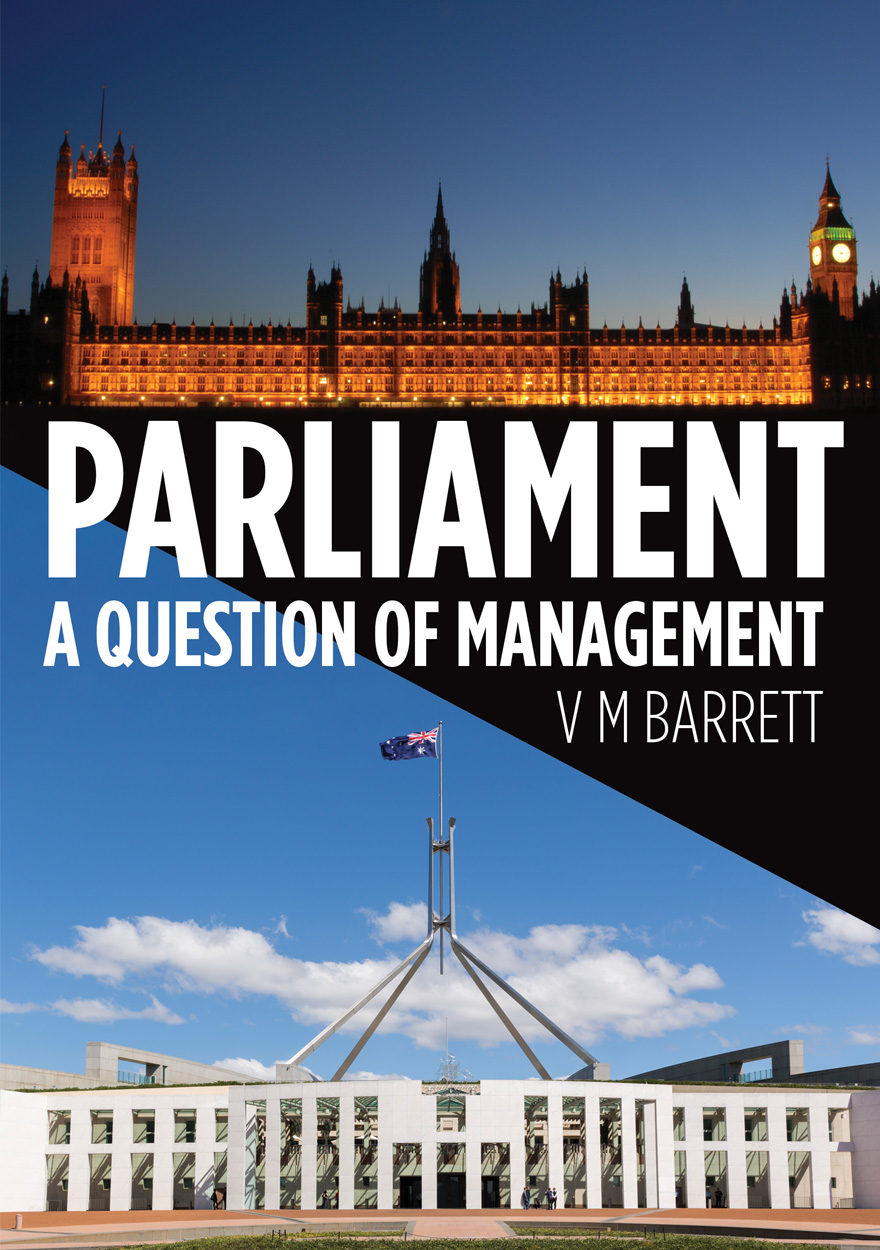
For centuries scholars and practitioners have studied parliament and its potential reform from an institutional perspective. Until now, few authors have addressed in depth the internal relationships among parliamentary actors, their competing beliefs and their influence on parliament’s effectiveness. Parliament is overwhelmingly an agonistic institution, and competition for status, resources, influence and control has pervaded its administration and impeded reform.
Parliaments appear to struggle with the concept of institutional management. The doctrine of exclusive cognisance or sole jurisdiction implies that parliament, and only parliament, should retain control of its internal business and processes. But why is parliament considered to be unique among public institutions, and why do parliaments appear to resist or even defy attempts to manage them more effectively?
At a time when the public is losing confidence in governments, politics and political institutions, parliament’s role as a broker of ideas and a forum for deliberative policymaking is under threat. In an institution where no one has overall authority and direction, staying relevant and managing public expectations present major challenges for its members and administrators.
This book examines parliamentary management in the national parliaments of Australia and the United Kingdom. Without claiming to be a ‘how to’ book, it attempts to provide a relatable account of how parliamentary officials and members of parliament carry out their inherently complex roles and how they might be assisted by contemporary public management approaches.
Designing Social Service Markets »
Risk, Regulation and Rent-Seeking
Publication date: September 2022
Governments of both right and left have been introducing market logics and instruments into Australian social services in recent decades. Their stated goals include reducing costs, increasing service diversity and, in some sectors, empowering consumers. This collection presents a set of original case studies of marketisation in social services as diverse as family day care, refugee settlement, employment services in remote communities, disability support, residential aged care, housing and retirement incomes. Contributors examine how governments have designed these markets, how they work, and their outcomes, with a focus on how risks and benefits are distributed between governments, providers and service users. Their analyses show that inefficiency, low‑quality services and inequitable access are typical problems. Avoiding simplistic explanations that attribute these problems to either a few ‘bad apple’ service providers or an amorphous neoliberalism that is the sum of all negative developments in recent years, the collection demonstrates the diversity of market models and examines how specific market designs make social service provision susceptible to particular problems. The evidence presented in this collection suggests that Australian governments’ market-making policies have produced fragile and fragmented service systems, in which the risks of rent-seeking, resource leakage and regulatory capture are high. Yet the design of social service markets and their implementation are largely under political control. Consequently, if governments choose to work with market instruments, they need to do so differently, working with principles and practices that drive up both quality and equality.
Rising Power and Changing People »
The Australian High Commission in India
Edited by: David Lowe, Eric Meadows
Publication date: September 2022
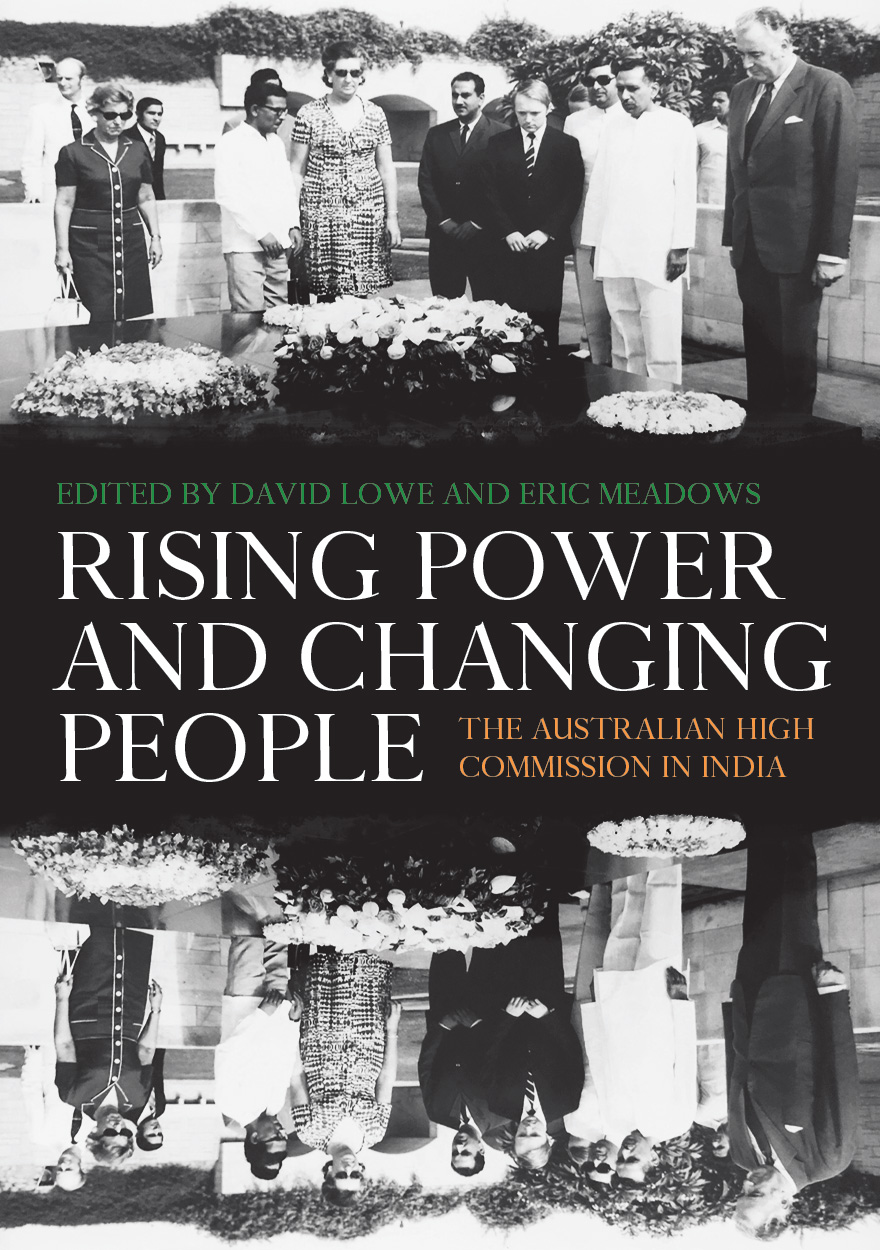
Beginning in 1943–44, Australia’s relationship with India is its oldest continuous formal diplomatic relationship with any Asian country. The early diplomatic exchanges between Australia and India have teased for their suggestions of potential unrealised, for opportunities missed, especially when compared with the very recent excitement about the future of Australia–India relations. How did Australia’s representatives and their staff in New Delhi negotiate the many dimensions of Australia–India relations? This book brings together expert analyses of the work of the Australian High Commission, its key people and the challenges they faced in New Delhi.
The important India Economic Strategy to 2035 report handed to the Australian Government in mid-2018 begins with the comment: ‘Timing has always been a challenge in Australia’s relationship with India.’ As the Australian Government works to implement some of the ambitious recommendations in the report, this book adds to our understanding of why timing has been a challenge, and how those at the coalface of the relationship have grappled with it.
Histories of Australian Rock Art Research »
Publication date: September 2022
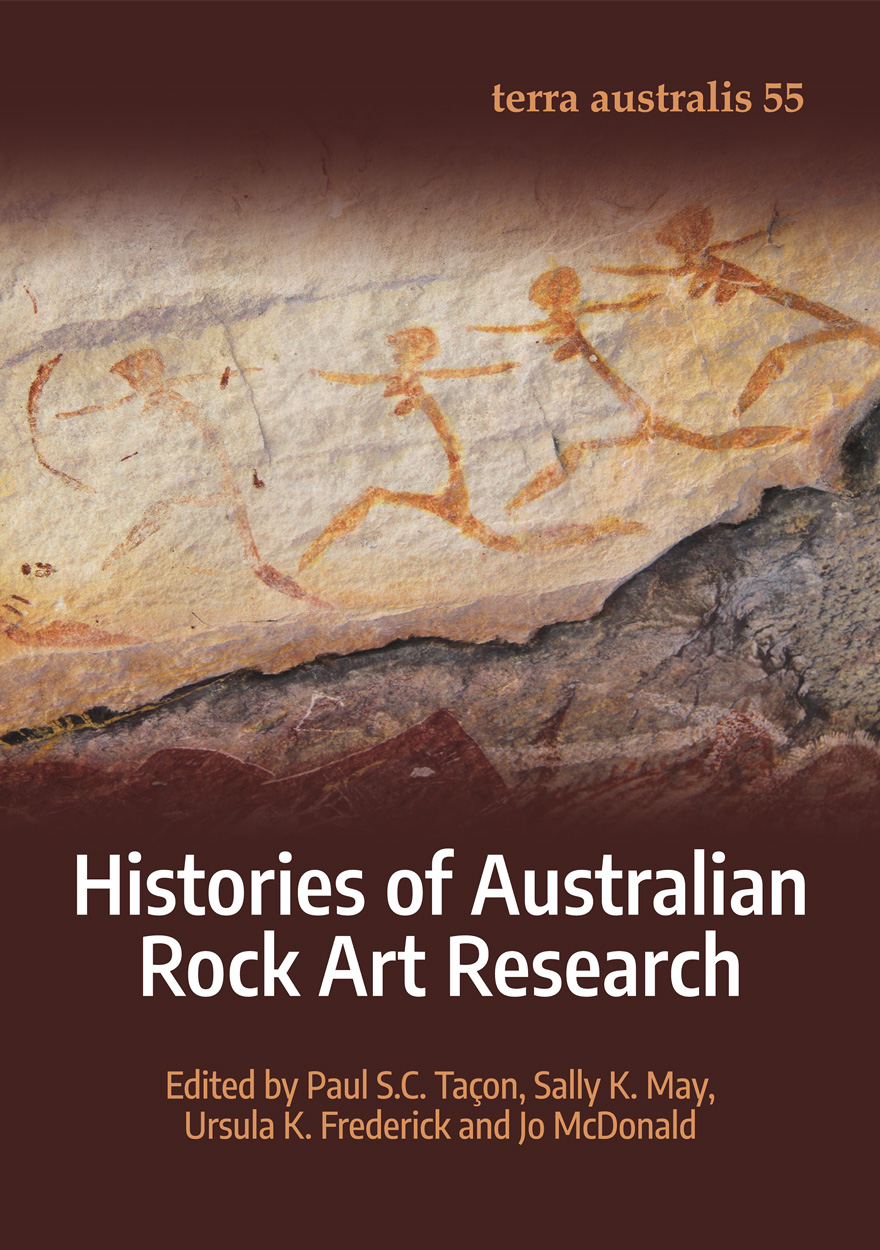
Australia has one of the largest inventories of rock art in the world with pictographs and petroglyphs found almost anywhere that has suitable rock surfaces – in rock shelters and caves, on boulders and rock platforms. First Nations people have been marking these places with figurative imagery, abstract designs, stencils and prints for tens of thousands of years, often engaging with earlier rock markings. The art reflects and expresses changing experiences within landscapes over time, spirituality, history, law and lore, as well as relationships between individuals and groups of people, plants, animals, land and Ancestral Beings that are said to have created the world, including some rock art. Since the late 1700s, people arriving in Australia have been fascinated with the rock art they encountered, with detailed studies commencing in the late 1800s. Through the 1900s an impressive body of research on Australian rock art was undertaken, with dedicated academic study using archaeological methods employed since the late 1940s. Since then, Australian rock art has been researched from various perspectives, including that of Traditional Owners, custodians and other community members. Through the 1900s, there was also growing interest in Australian rock art from researchers across the globe, leading many to visit or migrate to Australia to undertake rock art research. In this volume, the varied histories of Australian rock art research from different parts of the country are explored not only in terms of key researchers, developments and changes over time, but also the crucial role of First Nations people themselves in investigations of this key component of their living heritage.
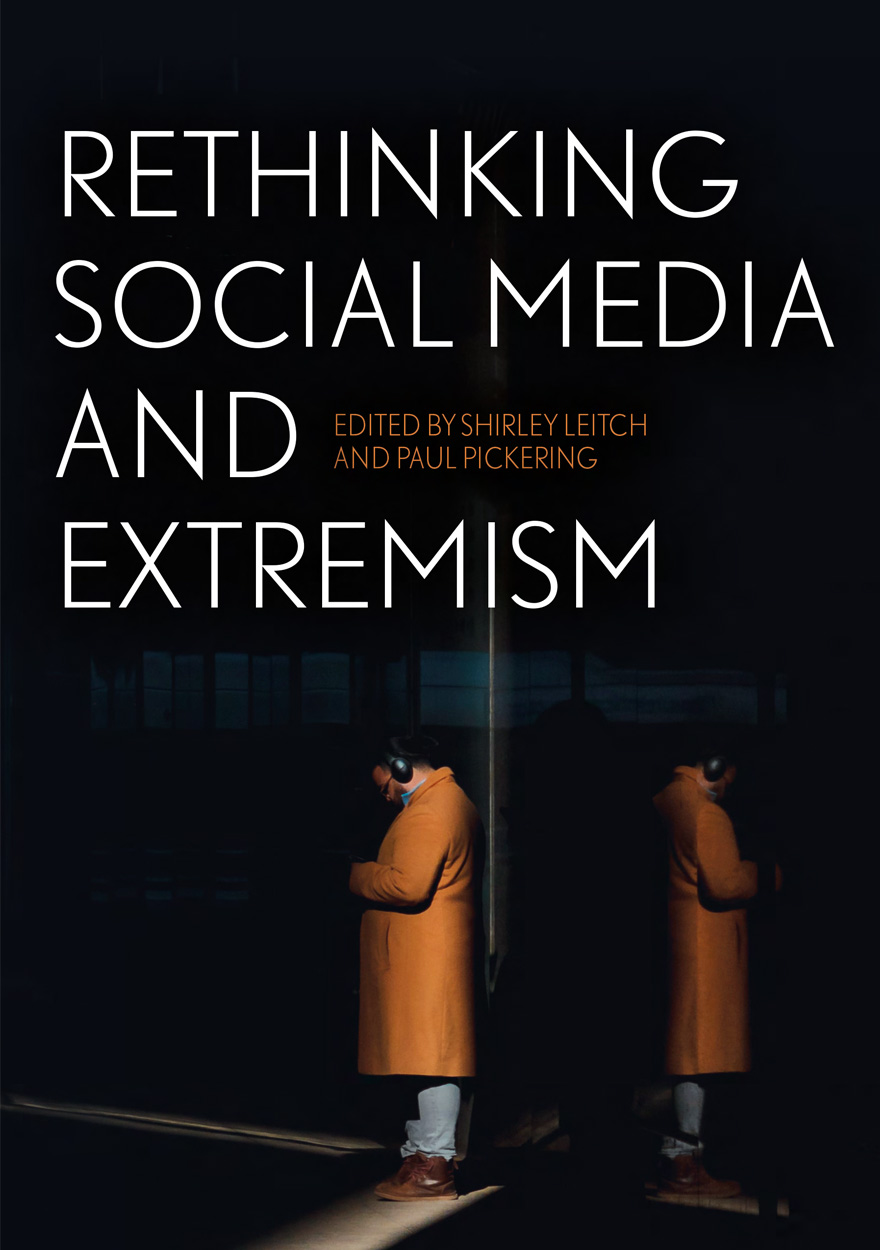
Rethinking Social Media and Extremism »
Edited by: Shirley Leitch, Paul Pickering
Publication date: June 2022
Terrorism, global pandemics, climate change, wars and all the major threats of our age have been targets of online extremism. The same social media occupying the heartland of our social world leaves us vulnerable to cybercrime, electoral fraud and the ‘fake news’ fuelling the rise of far-right violence and hate speech. In the face of widespread calls for action, governments struggle to reform legal and regulatory frameworks designed for an analogue age. And what of our rights as citizens? As politicians and lawyers run to catch up to the future as it disappears over the horizon, who guarantees our right to free speech, to free and fair elections, to play video games, to surf the Net, to believe ‘fake news’?
Rethinking Social Media and Extremism offers a broad range of perspectives on violent extremism online and how to stop it. As one major crisis follows another and a global pandemic accelerates our turn to digital technologies, attending to the issues raised in this book becomes ever more urgent.
ANU Historical Journal II: Number 3 »
Publication date: June 2022
This issue of the ANU Historical Journal II brings together articles, reviews, lectures and artwork by historians from across Australia. It encompasses a wide range of subjects—local and foreign, modern and medieval—including Queensland politics in the 1960s and 1970s, the children's fiction of Victorian historian Margaret Kiddle, the moral lessons of Robin Hood tales, and the lives of Soviet ‘displaced persons’ in post-war Germany. The issue also exhibits a series of portraits of Australia's first eight prime ministers, as well as the short memoir of an ANU alumnus' experiences under the tutelage of Manning Clark. Finally, our reviewers discuss themes of colonialism, climate and transnational lives in recent published histories.
Download for free
Not available for purchase
Australian Economic History »
Transformations of an Interdisciplinary Field
Authored by: Claire E. F. Wright
Publication date: June 2022
In a time of pandemics, war and climate change, fostering knowledge that transcends disciplinary boundaries is more important than ever. Economic history is one of the world’s oldest interdisciplinary fields, with its prosperity dependent on connection and relevance to disciplinary behemoths economics and history. Australian Economic History is the first history of an interdisciplinary field in Australia, and the first to set the field’s progress within the structures of Australian universities. It highlights the lived experience of doing interdisciplinary research, and how scholars have navigated the opportunities and challenges of this form of knowledge. These lessons are vital for those seeking to develop robust interdisciplinary conversations now and in the future.
‘This previously untold story of economic history in Australia exposes the centrality of economic thought and scholarship to Australian intellectual and political life. Deftly positioning economic history in an innovative institutional, place-based and person-focused narrative, Claire Wright entangles economics with the history of education to produce a tale of university interdisciplinarity, influence and impact. Written with vitality and bursting with both data and anecdote, this book makes an exceptional contribution to the intersecting fields of history, economics and higher education studies.’
– Hannah Forsyth, author of A History of the Modern Australian University.
‘Few readers would expect to find a classical tragedy in the story of an academic field. Yet that is what Claire Wright shows us in this study of Economic History, as it has been practiced in Australia. She traces the field from legendary beginnings to triumphant growth to organisational collapse - and renaissance on other terms. Carefully researched and vigorously written, this book raises questions about disciplines and interdisciplinary fields, universities and markets, and social bases of intellectual work, that are relevant to all fields today.’
– Raewyn Connell, author of The Good University
‘Australia proved a pioneer in the study of economic history, nurturing a discipline with innovative data and understanding of material trends. Yet by the 1990s economic history departments closed as senior scholars retired and the field was subsumed by conventional economics. In this absorbing study, Dr Claire Wright challenges the conventional account. She is tough-minded about financial and institutional pressures on the field, but cautiously optimistic about the future. It is a mistake, she argues, to see institutional representation as the benchmark of influence. Instead, the interdisciplinary nature of economic history has encouraged new research and teaching across the humanities and social sciences. With close attention to individual scholars and their university departments, and a deep sense of the trajectory of the field, Australian Economic History: Transformations of an Interdisciplinary Field is an original and important contribution to Australian intellectual history.’
– Glyn Davis, Distinguished Professor of Political Science in the Crawford School of Public Policy, The Australian National University
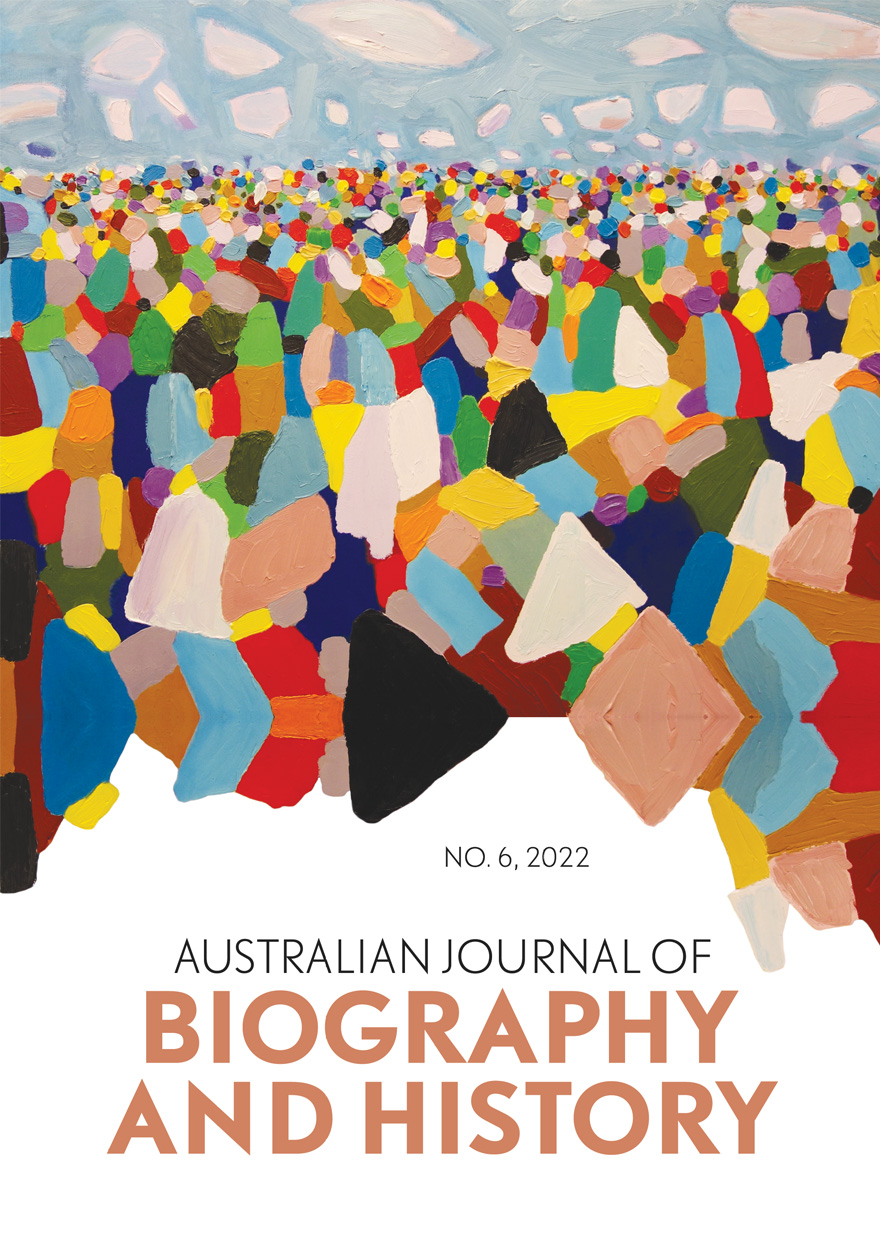
Australian Journal of Biography and History: No. 6, 2022 »
Publication date: May 2022
This special issue of Australian Journal of Biography and History, ‘Writing Slavery into Biography: Australian Legacies of British Slavery’, uses biographical approaches to explore how British slavery shaped the Australian colonies. It is the first stand-alone journal issue to feature an emerging body of historical work tracing the movement of people, investment and ideas from the Caribbean to Australia. Seven refereed articles and a roundtable discussion show how investment, imperial aspiration and migration turned towards Britain's ‘Second Empire’ in the aftermath of the Slavery Abolition Act 1833.
A substantive introduction reviews this emerging field of research and outlines preliminary findings. In her article, Jane Lydon examines the movement of two interconnected families (the Ridleys and Walcotts) from Demerara to Britain to the Swan River, where they acquired large land grants, participated in exploration and resource exploitation, and led the search for labour sources. Georgina Arnott investigates Western Australia’s first governor James Stirling’s biographical links to American and Caribbean slavery in light of ideas about race and labour that he promoted in Western Australia. And together Zoë Laidlaw and Georgina Arnott show how dictionaries of biography can be used alongside the Legacies of British Slavery database (hosted by University College London) to identify Australasian settlers with connections to slavery. They note the ways in which collective approaches to biography can reveal otherwise invisible patterns in global transfers of wealth, people and ideas.
With an eye to regionally specific processes of subjugation and enslavement in the northern Western Australian pearling and pastoralist industries, Malcolm Allbrook considers biography’s potential to illustrate the shadowy world of ‘blackbirding’ in relation to the perpetrators, the officials and the Aboriginal enslaved. Emma Christopher brings to life the colonial legacies of slavery in her account of Albert Messiah, Ishmael Williamson and John Henderson, sailors of African origin who worked on Pacific labour ships during the late nineteenth century, and whose lives illuminate the complex racial hierarchies of the Queensland frontier. Beth Robertson tells the layered story of her own great-great-grandfather, Edward Stirling, the illegitimate son of a British slave-owner and a woman of Ghanaian descent, whose material benefit from slavery helped him become a successful pastoralist and miner in South Australia, despite remaining the subject of racial prejudice.
Paul Arthur and Isabel Smith note the ‘biographical turn’ in museum exhibitions featuring stories of enslavement over the last two decades. They argue that this has enabled exhibitors to show stories of resistance, contingency and agency, albeit while navigating the ethical complexities of telling other people’s traumatic life stories. The feature section of this issue concludes with a roundtable discussion between Catherine Hall, Keith McClelland, Zoë Laidlaw, Jeremy Martens and Georgina Arnott on the topic of linking the legacies of British slave ownership to Australian colonisation. Here, Hall observes that biography, when used in combination with prosopography, reveals how the lives and family trajectories of slave owners were distinguished amongst imperial capitalists at large. This issue builds understanding of the precise ways that slavery shaped the Australian colonies.
Download for free
Not available for purchase
Aboriginal History Journal: Volume 45 »
Edited by: Crystal McKinnon, Ben Silverstein
Publication date: April 2022
This volume begins with Michael Aird, Joanna Sassoon and David Trigger’s meticulous research tracing the well-known but sometimes confused identity of Jackey Jackey of the Lower Logan River in south-east Queensland. Emma Cupitt describes the multivocality and intertextuality of Radio Redfern’s coverage of Aboriginal protests in Sydney as the 1988 Australian Bicentenary celebrations took place elsewhere in the city. Similarly approaching sources for their multiplicity, Matt Poll and Amanda Harris provide a reading of the ambassadorial work performed by assemblages of Yolngu bark paintings in diverse exhibition spaces after the Second World War.
Cara Cross historicises the production and use of mineral medicine—or lithotherapeutics—derived from Burning Mountain in Wonnarua Country, issuing a powerful call for the recognition of Indigenous innovation as cultural heritage. In a collaborative article, Fred Cahir, Ian Clark, Dan Tout, Benjamin Wilkie and Jidah Clark read colonial records against the grain to narrate a nineteenth-century history of Victorian Aboriginal relationships with fire, strengthening the case for the revitalisation of these fire management practices. And, based on extensive oral history work, Maria Panagopoulos presents Aboriginal narrations of the experience of moving—or being moved—from the Manatunga settlement on the outskirts of Robinvale into the town itself, on Tati Tati Country in the Mallee region of Victoria.
In addition to a range of book reviews, we are also pleased to include Greg Lehman’s review essay concerning Cassandra Pybus’s recent award-winning Truganini: Journey through the Apocalypse, which considers the implications of our relationships with history and how they help to think through practices of researching and writing Aboriginal history.
Download for free
Not available for purchase