



Search titles
Displaying results 121 to 130 of 572.

Australian Journal of Biography and History: No. 3, 2020 »
Publication date: April 2020
The articles in this issue of the Australian Journal of Biography and History consider subjects who have lived across and between national and internal Australian boundaries, and the authors have thus been compelled to address the methodological and theoretical problems of mobility. Kate Bagnall addresses the seemingly insurmountable problem of writing about Chinese women who settled in Australia in the second half of the twentieth century. Contrasting with the dearth of information on Chinese women immigrants to colonial New South Wales, Jackie Dickenson’s chapter on Hong Kong–based merchant and trader Melbourne-born Elma Kelly (1895–1974) benefits from an abundance of documentation, both in the realm of the personal and official. In her article on the Corney family in the aftermath of World War I, Alexandra McKinnon considers the record of loss and sorrow preserved in the archives of the Australian War Memorial. Very different methodological questions are explored by Suzanne Robinson in her reflections on writing a biography of the Australian composer Peggy Glanville-Hicks (1912–90). As a feminist biographer, Robinson had to face a most ‘troublesome question’ of whether her subject’s considerable imperfections, which became evident during research, risked undermining her status as a composer, particularly one whose reputation was yet to be fully established.
A different form of methodological question is posed by Pat Buckridge in his article on three generations of Macdougall men, each of whom became journalists—Dugald (1833–79), who also excelled in business and politics, Dugald the younger (1872–1947), and James (1903–95). The question Buckridge considers is whether his subjects can ‘usefully be considered as a grouped biographical entity signifying more than the sum of its parts, which is to say more than the three separate lives’. By contrast, Peter Crabb’s article on the colonial goldfields reporter John Augustus Hux (1826–64) relates the story of a single figure who, having made connections in his English homeland that would serve him well in Australia, provided eyewitness accounts of a number of significant goldfields in New South Wales, which were widely read in the colony and thus helped to form popular images of the industry. Finally, in a departure from the theme of mobility characterising the other contributions, Nichola Garvey documents her experiences of working with the Western Australian iron ore magnate Andrew Forrest to research and write his biography. In what was conceived by both the author and the subject as an ‘authorised biography’, Garvey’s article raises some fundamental questions about biographical writing of living persons, including the utility and pitfalls of what she calls ‘expressivist anthropology’, as well as the scope of authorisation in biographical writing.
Download for free
Not available for purchase

East Asia Forum Quarterly: Volume 12, Number 1, 2020 »
Publication date: March 2020
The changing geopolitical context compels middle powers to act. Countries have responded by forming explicit alliances, building upon hedging strategies or altering their leanings from one great power to another. The need for collective action is more urgent than ever to deal with emerging regional and global challenges.
This issue of East Asia Forum Quarterly looks at middle powers and the range of priorities they have. Some are focused on their domestic priorities while others are more eager to shape the political, economic and security dimensions in the region. Our contributors offer a variety of perspectives on the challenges that middle powers face and identify the call of middle-power vision in defending the rules-based order.
EAFQ 12.1 is dedicated to Aileen S.P. Baviera, founding president of Asia Pacific Pathways to Progress, who died on 21 March 2020, from pneumonia related to COVID-19.
East Asia Forum Quarterly grew out of East Asia Forum (EAF) online, which has developed a reputation for providing a platform for the best in Asian analysis, research and policy comment on the Asia Pacific region in world affairs. EAFQ aims to provide a further window onto research in the leading research institutes in Asia and to provide expert comment on current developments within the region. The East Asia Forum Quarterly, like East Asia Forum online, is an initiative of the East Asia Forum (EAF) and its host organisation, the East Asian Bureau of Economic Research (EABER) in the Crawford School of Economics and Government in the College of Asia & the Pacific at The Australian National University.
Download for free
Not available for purchase

In from the Cold »
Reflections on Australia’s Korean War
Publication date: March 2020
Open hostilities in the Korean War ended on the 27th of July 1953. The armistice that was signed at that time remains the poignant symbol of an incomplete conclusion – of a war that retains a distinct possibility of resuming at short notice.
So what did Australia contribute to the Korean War from June 1950 to July 1953? What were the Australians doing there? How significant was the contribution and what difference did it make? What has that meant for Australia since then, and what might that mean for Australia into the future?
Australians served at sea, on land and in the air alongside their United Nations partners during the war. They fought with distinction, from bitterly cold mountain tops, to the frozen decks of aircraft carriers and in dogfights overhead. This book includes the perspectives of leading academics, practitioners and veterans contributing fresh ideas on the conduct and legacy of the Korean War. International perspectives from allies and adversaries provide contrasting counterpoints that help create a more nuanced understanding of Australia’s relatively small but nonetheless important contribution of forces in the Korean War. The book finishes with some reflections on implications that the Korean War still carries for Australia and the world to this day.

Vietnam Vanguard »
The 5th Battalion's Approach to Counter-Insurgency, 1966
Edited by: Ron Boxall, Robert O’Neill
Publication date: February 2020
The Vietnam War, and Australia’s part in it, was a major military event, calling for willingness to face death and destruction on the battlefield on the part of those sent there, especially the men of our infantry battalions who formed the spearhead of our forces in Vietnam. For many reasons, the Australian public know relatively little about what our Army did in Vietnam during the war, particularly during the years of our peak commitment, 1965–72. This book attempts to make the true nature of the war clearer to readers, emphasising how hard fought it was during major operations.
Twenty-seven of the contributing authors of this book were involved in the 1966 deployment of the 1st Australian Task Force into Phuoc Tuy Province. This formation was the first Australian Army force larger than an infantry battalion group to be deployed into a major war since World War II. 5th Battalion, the Royal Australian Regiment (5 RAR), was in the vanguard as the task force’s first element committed to operations to seize and occupy Nui Dat base and embark on establishing dominance over the enemy.
The narratives presented in this book give rare insights into thoughts of the soldiers at the time and how they have come to view the Australian Government’s hurried expansion of its initial commitment to that war, the Army’s state of preparedness for that wider involvement, and how those in its forefront adapted to get the job done, both in and out of operations, despite numerous shortcomings in higher level planning.
Both professional soldiers and conscripted national servicemen have contributed viewpoints to these pages.

Wiidhaa »
An Introduction to Gamilaraay
Authored by: John Giacon
Publication date: February 2020
The Gamilaraay language declined in use for many years after the colonisation of Australia. From around 1990, Gamilaraay people and others have been working to revive the language. This book draws on recent research into previous records and analyses of Gamilaraay and of the closely related, and better recorded, Yuwaalaraay. It provides an introduction to many aspects of the language including verbs, the case system and the extensive pronoun paradigm, in a format that students have found very helpful for the last 12 years.
Please note: Readers will need to download and open the PDF files in the latest version Adobe Acrobat to access and listen to the sound files within the book.
This textbook is used as course material in:
Gamilaraay – an introduction to an Australian Indigenous Language INDG2003 and INDG6003

Australia’s Fertility Transition »
A study of 19th-century Tasmania
Authored by: Helen Moyle
Publication date: February 2020
In the late 19th and early 20th centuries, most countries in Europe and English-speaking countries outside Europe experienced a fertility transition, where fertility fell from high levels to relatively low levels. England and the other English-speaking countries experienced this from the 1870s, while fertility in Australia began to fall in the 1880s.
This book investigates the fertility transition in Tasmania, the second settled colony of Australia, using both statistical evidence and historical sources. The book examines detailed evidence from the 1904 New South Wales Royal Commission into the Fall in the Birth Rate, which the Commissioners regarded as applying not only to NSW, but to every state in Australia.
Many theories have been proposed as to why fertility declined at this time: theories of economic and social development; economic theories; diffusion theories; the spread of secularisation; increased availability of artificial methods of contraception; and changes in the rates of infant and child mortality. The role of women in the fertility transition has generally been ignored.
The investigation concludes that fertility declined in Tasmania in the late 19th century in a period of remarkable social and economic transformation, with industrialisation, urbanisation, improvements in transport and communication, increasing levels of education and opportunities for social mobility. One of the major social changes was in the status and role of women, who became the driving force behind the fertility decline.
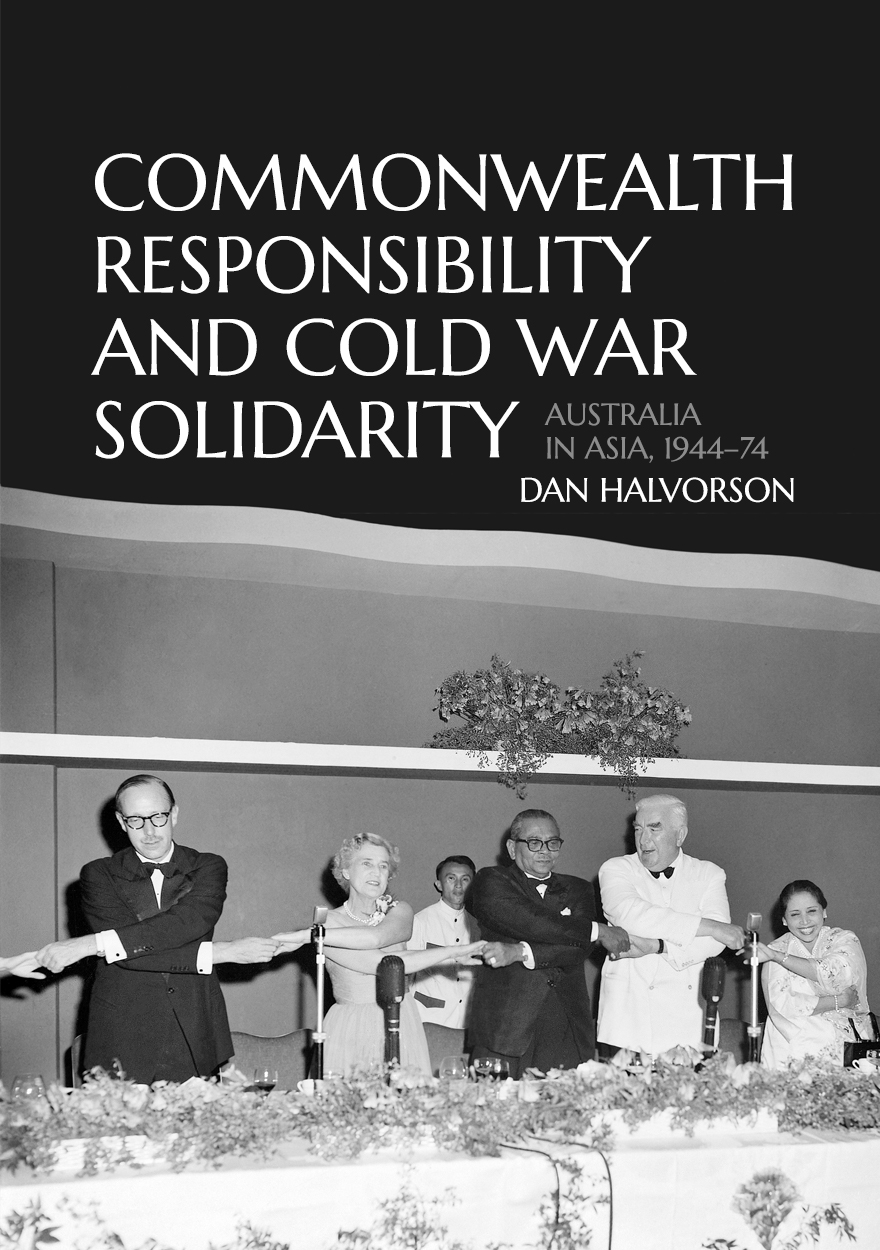
Commonwealth Responsibility and Cold War Solidarity »
Australia in Asia, 1944–74
Authored by: Dan Halvorson
Publication date: November 2019
Australia’s engagement with Asia from 1944 until the late 1960s was based on a sense of responsibility to the United Kingdom and its Southeast Asian colonies as they navigated a turbulent independence into the British Commonwealth. The circumstances of the early Cold War decades also provided for a mutual sense of solidarity with the non‑communist states of East Asia, with which Australia mostly enjoyed close relationships. From 1967 into the early 1970s, however, Commonwealth Responsibility and Cold War Solidarity demonstrates that the framework for this deep Australian engagement with its region was progressively eroded by a series of compounding, external factors: the 1967 formation of ASEAN and its consolidation by the mid-1970s as the premier regional organisation surpassing the Asian and Pacific Council (ASPAC); Britain’s withdrawal from East of Suez; Washington’s de‑escalation and gradual withdrawal from Vietnam after March 1968; the 1969 Nixon doctrine that America’s Asia-Pacific allies must take up more of the burden of providing for their own security; and US rapprochement with China in 1972. The book shows that these profound changes marked the start of Australia’s political distancing from the region during the 1970s despite the intentions, efforts and policies of governments from Whitlam onwards to foster deeper engagement. By 1974, Australia had been pushed to the margins of the region, with its engagement premised on a broadening but shallower transactional basis.

International Review of Environmental History: Volume 5, Issue 2, 2019 »
Edited by: James Beattie
Publication date: November 2019
International Review of Environmental History takes an interdisciplinary and global approach to environmental history. It encourages scholars to think big and to tackle the challenges of writing environmental histories across different methodologies, nations, and time-scales. The journal embraces interdisciplinary, comparative and transnational methods, while still recognising the importance of locality in understanding these global processes.
The journal's goal is to be read across disciplines, not just within history. It publishes on all thematic and geographic topics of environmental history, but especially encourage articles with perspectives focused on or developed from the southern hemisphere and the ‘global south’.
Download for free
Not available for purchase

Following the Water »
Environmental History and the Hydrological Cycle in Colonial Gippsland, Australia, 1838–1900
Authored by: Kylie Carman-Brown
Publication date: October 2019
Water reflects culture.
This book is a detailed analysis of hydrological change in Australia’s largest inland waterway in Australia, the Gippsland Lakes in Victoria, in the first 70 years of white settlement.
Following air, water is our primal need. Unlike many histories, this book looks at the entire hydrological cycle in one place, rather than focusing on one bit. Deftly weaving threads from history, hydrology and psychology into one, Following the Water explores not just what settlers did to the waterscape, but probes their motivation for doing so.
By combining unlikely elements together such as swamp drainage, water proofing techniques and temperance lobbying, the book reveals a web of perceptions about how water ‘should be’. With this laid clear, we can ask how different we are from our colonial forebears.

Australian Journal of Biography and History: No. 2, 2019 »
Publication date: October 2019
The second issue of the Australian Journal of Biography and History is a joint project between the National Centre of Biography at The Australian National University (ANU), and the Canberra and District Historical Society (CDHS). It seeks to recognise, perhaps reiterate, the relationship between the study of biography, as exemplified by the Australian Dictionary of Biography (ADB), and the practice of local and family history and heritage, the mission of the society. Most of the contributors are members of the society, and have been involved in the often painstaking and minute study of aspects of the history of Canberra and its region for many years. In ‘A City and Its People: Canberra in the Australian Dictionary of Biography’, Karen Fox explores Canberra history by discussing some of wide array of people ‘who have lived, worked, loved, and fought in the Canberra district’, and who are represented in the ADB. James McDonald, in his article ‘A Good Sheep Station Ruined’, examines the pastoral origins of the Canberra district, finding that the industry in the region was, before the founding of the capital city, a centre of innovation and enterprise, with stations such as Henry ‘Babe’ Curran’s Ginninderra a national exemplar of the wool industry. In a second article, ‘Migration as an Opportunity for Reinvention’, McDonald discusses the potential of immigration to refashion identities, using the biographies of Alfred and Margaret Rich, early settlers at Gundaroo, who had faced disadvantages in England because of their racial backgrounds.
‘Three Years in the Life of Chief Constable Patrick Kinsela’, by Gillian Kelly, examines the role of the first policeman in the district, who took up his posting at the nascent town of Queanbeyan in 1837, and in many ways exemplified the system of justice in the region until his early death in 1841. Kinsela is an unusual biographical subject as very little is known about his life until he assumed the role, while from then on, his life and times comes into focus by virtue of his reports, reports in the local press and colonial government inquiries. Michael Hall, in his article ‘The Sentinel over Canberra’s Military History’, explores the connections between the Anglican Church of St John the Baptist, now in the Canberra suburb of Reid, and the military, and the war experiences of some of its parishioners. The final two articles of the issue move towards aspects of the modern history of Canberra, the first exploring the life stories of Vince and Viola Kalokerinos who, for many years, ran a milk bar at Curtin, a place that has assumed a prominent place in both the commercial and social history, and indeed has become almost a part of the folklore, of the city. Their story is a reminder of the impact of Greek immigrants on the development of Canberra, and their willingness to work long hours to provide essential services to a population that was made up largely of government employees. Finally, Nick Swain discusses the life and work of one of Canberra’s early photographic entrepreneurs, Les Dwyer, who came to Canberra as a construction labourer in 1924 but, as a consequence of the Depression and workplace injury, converted a hobby into an enterprise. Included also are two essay length review articles, and a series of reviews on recently published Australian biographical works.
Download for free
Not available for purchase